
Not all water filters are created equal. Some strip your water down to nothing; others leave contaminants behind. Selective filtration hits the sweet spot—removing harmful substances while preserving the minerals your body actually needs. Here's why that matters more than most people realize.
What Is Selective Filtration?
Selective filtration is a water treatment approach that differentiates between harmful contaminants and beneficial dissolved minerals. Instead of indiscriminately removing everything from tap water, selective filtration targets specific threats—lead, chlorine, PFAS, volatile organic compounds, chromium-6, and mercury—while allowing naturally occurring calcium, magnesium, and potassium to pass through.
Woder, a US-based water filter manufacturer, pioneered a proprietary version of this approach called Selective Filtration™. Their technology uses nanoparticles that have an affinity for contaminants but not for essential minerals. As Woder describes it, the nanoparticles "attract and filter out 99.9% of contaminants but leave in the naturally occurring minerals that are essential to your health." The result is water that tastes natural, stays mineral-rich, and is free from the substances you actually want removed.
The Problem with Total Purification
Reverse osmosis (RO) has long been considered the gold standard of home water purification. It forces water through a semipermeable membrane so fine that it removes almost all total dissolved solids. The problem? That includes everything beneficial too.
RO systems remove healthy minerals like calcium and magnesium along with contaminants, producing water that can taste flat and even become slightly corrosive to metal plumbing. RO systems also waste thousands of gallons of water annually while flushing contaminants down the drain, require a storage tank, and often need a separate remineralization stage to restore what they just removed.
Distillation presents a similar issue. By boiling water into steam and condensing it, distillation strips virtually all dissolved minerals, creating ultra-pure water that many experts consider suboptimal for daily drinking.
The irony of these total-purification methods is clear: they solve one problem (contaminants) while potentially creating another (mineral depletion).
What the WHO Says About Demineralized Water
This is not just a marketing talking point. The World Health Organization has examined the health consequences of drinking demineralized water in depth. A WHO-commissioned report titled Nutrients in Drinking Water concluded that demineralized water "is not considered ideal drinking water" due to its absence of essential minerals.
The WHO has suggested minimum Total Dissolved Solids (TDS) in drinking water should be 150–300 mg/L, with minimum calcium of 20 mg/L and magnesium of 10 mg/L. These recommendations exist because research has linked low-mineral water consumption to concerning health outcomes.
Epidemiological studies comparing populations drinking mineral-rich "hard" water versus demineralized "soft" water have found associations between low-mineral water and higher rates of cardiovascular disease, as well as potential links to pregnancy complications and bone-health issues. When you drink mineral-free water, your kidneys compensate by flushing out more minerals through urine, which can gradually deplete your reserves rather than replenish them.
Early symptoms of low electrolyte levels from sustained demineralized water consumption include tiredness, weakness, and headaches. Calcium and magnesium in water are also needed for protection against the uptake of toxic elements like lead and uranium in the body—an often-overlooked benefit of mineral-rich water.
How Selective Filtration Actually Works
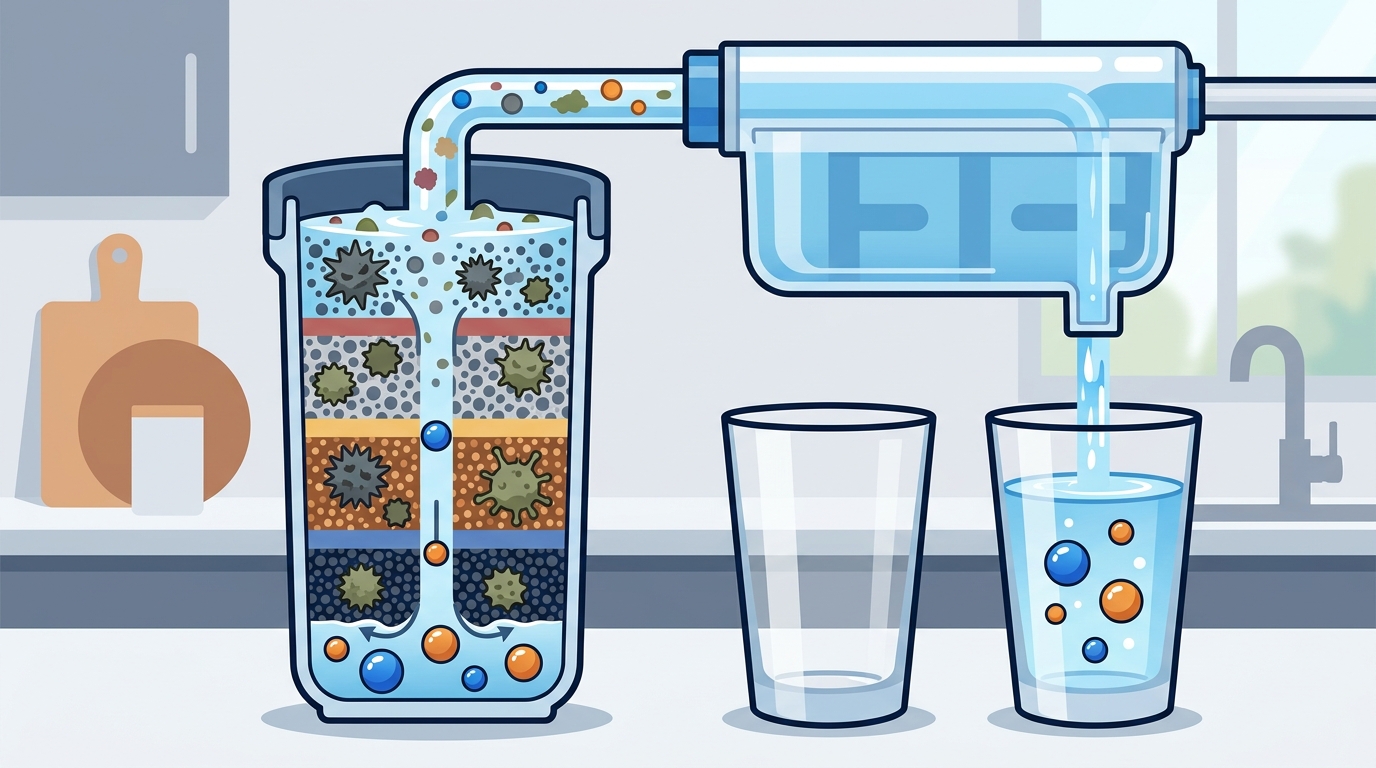
Understanding why selective filtration preserves minerals requires a quick look at chemistry. Harmful contaminants and beneficial minerals differ in their molecular properties—charge, size, and chemical behavior. Selective filtration media are engineered to exploit these differences.
Woder's Gen4 Advanced Filtration systems combine specialized media that target heavy metals, chlorine, VOCs, PFAS, and other harmful compounds through chemical adsorption. The filtration media has a strong affinity for contaminant molecules while remaining largely inert to dissolved minerals like calcium and magnesium ions.
Unlike RO membranes that physically block nearly everything based on molecular size, selective filtration media work through chemical selectivity. This means:
- No water is wasted during filtration—there is no reject stream
- No electricity or pump is required
- No storage tank is needed
- Water pressure remains strong at the tap
- Essential minerals flow through naturally
Woder filters are WQA certified to NSF/ANSI 42 for chlorine taste and odor reduction and NSF/ANSI 372 for lead-free compliance. Their systems are designed and manufactured in the USA and can be installed under a kitchen sink in minutes with no permanent plumbing changes.
Selective Filtration vs. RO vs. Carbon Filters: A Direct Comparison
| Feature | Selective Filtration (Woder) | Reverse Osmosis | Basic Carbon Filter |
|---|---|---|---|
| Contaminant removal | 99.9% (lead, PFAS, VOCs, chlorine, heavy metals) | Up to 99.99% | Chlorine, taste, odor mainly |
| Mineral retention | Yes—calcium, magnesium, potassium preserved | No—removes nearly all minerals | Yes—minerals pass through |
| Water waste | None | Significant (often 3:1 waste ratio) | None |
| Requires electricity | No | Often yes (pump) | No |
| Storage tank needed | No | Usually yes | No |
| Removes bacteria/viruses | No (designed for treated municipal water) | Yes | No |
| Taste quality | Natural, mineral-rich | Flat unless remineralized | Improved but limited purification |
| Installation complexity | DIY in minutes | Moderate to complex | Simple |
The key differentiator is that selective filtration occupies a unique middle ground. Basic carbon filters retain minerals but lack the power to remove heavy metals, PFAS, and other serious contaminants. RO removes those contaminants but takes the minerals with them. Selective filtration removes the bad while keeping the good—no remineralization step required.
Five Health Advantages of Mineral-Preserving Filtration
1. Supports Bone and Dental Health
Calcium in drinking water contributes to bone density and dental health. While food is the primary source, water-derived calcium has high bioavailability. Minerals like calcium and magnesium in water play vital roles in oral health, and research has shown that some water filters can significantly alter the mineral content that supports these functions.
2. Cardiovascular Protection
Studies have repeatedly linked magnesium-rich drinking water to lower cardiovascular risk. People drinking demineralized water that is low in calcium and magnesium have been associated with higher rates of cardiovascular disease compared to those drinking mineral-rich water. Selective filtration preserves these protective minerals automatically.
3. Better Hydration and Electrolyte Balance
Demineralized water can disrupt your body's electrolyte balance. When consumed, the intestines must add electrolytes to mineral-free water by pulling them from body reserves, resulting in dilution of electrolytes and insufficient body water redistribution. Mineral-rich filtered water supports hydration without taxing your reserves.
4. Superior Taste Without Additives
Minerals give water its natural, refreshing taste. Without minerals, water can taste bland and flat, which may actually reduce how much people drink—undermining hydration. Selective filtration delivers great-tasting water without needing mineral drops, alkaline pitchers, or remineralization cartridges.
5. Protection from Toxic Element Absorption
Calcium and magnesium in drinking water serve a protective function beyond nutrition. Research indicates that these minerals are needed for protection against the uptake and transportation of toxic elements like lead and uranium in the body. By preserving mineral content while removing lead, selective filtration provides a dual layer of defense.
Practical Considerations for Your Home
Who Benefits Most from Selective Filtration?
- Families on municipal water who want clean, mineral-rich drinking water without the complexity of RO systems
- Health-conscious households concerned about PFAS, lead, and heavy metals in their water supply
- Renters and homeowners who need a filter they can install themselves without permanent plumbing modifications
- Environmentally minded consumers who want to eliminate plastic bottle waste and water waste from RO systems
Choosing the Right Woder Filter
Woder offers several configurations based on your connection type and contamination concerns:
- WD-G4-DC: Direct-connect under-sink filter for standard kitchen faucets. Removes 99.9% of lead, heavy metals, chlorine, PFAS, chromium-6, and VOCs.
- WD-G4-JG: Inline filter with John Guest quick-connect fittings for refrigerators, ice makers, and RVs.
- WD-HMG4-DC: Advanced combo filter with extra heavy metal removal media for areas with elevated lead or heavy metal levels.
- WD-D-20m-G4-DC: Dual-stage system combining sediment removal with advanced filtration for homes with high sedimentation.
All Woder cartridges carry a one-year warranty and are designed for easy DIY replacement. Woder also recommends testing your water before and after installation so you can verify performance with your specific water chemistry.
Key Takeaways
- Selective filtration removes 99.9% of harmful contaminants while preserving essential minerals like calcium, magnesium, and potassium.
- The WHO has raised concerns about long-term consumption of demineralized water, recommending minimum mineral levels in drinking water.
- Reverse osmosis removes contaminants effectively but also strips beneficial minerals, requiring remineralization to restore water quality.
- Selective filtration requires no electricity, wastes no water, and needs no storage tank—making it simpler and more efficient than RO.
- Mineral-rich filtered water supports bone health, cardiovascular function, electrolyte balance, and may even protect against toxic element absorption.
- Woder's Selective Filtration™ technology is WQA certified, US-made, and installs in minutes under your sink.
Frequently Asked Questions
What is selective filtration and how does it differ from reverse osmosis?
Selective filtration uses specialized media that chemically target contaminants like lead, chlorine, PFAS, and heavy metals while allowing beneficial minerals to pass through. Reverse osmosis uses a physical membrane that blocks nearly all dissolved substances, including both contaminants and healthy minerals like calcium and magnesium. The key difference is that selective filtration preserves your water's natural mineral content without a separate remineralization step.
Does selective filtration remove PFAS and lead?
Yes. Woder's Gen4 Selective Filtration™ systems remove 99.9% of lead, PFAS, heavy metals, chlorine, chromium-6, mercury, and volatile organic compounds. These claims have been tested by CLB Labs, and the systems are WQA certified to NSF/ANSI 42 and NSF/ANSI 372.
Is demineralized water bad for your health?
The WHO has noted that demineralized water without further mineral enrichment is not considered ideal drinking water. Long-term consumption of very low-mineral water has been associated with electrolyte imbalances, and epidemiological studies have linked it to higher rates of cardiovascular disease. For most people, drinking mineral-rich water is the safer and more natural choice.
Do I need a remineralization stage with a Woder filter?
No. Because Woder's selective filtration preserves naturally occurring minerals during the filtration process, there is no need for a separate remineralization cartridge, mineral drops, or alkaline pitcher. Your filtered water retains calcium, magnesium, and potassium as they naturally occur in your tap water.
How long does a Woder filter cartridge last?
Woder cartridges carry a one-year warranty. Actual lifespan may vary depending on local water conditions and usage patterns. Woder recommends testing your water periodically to confirm that the filter is performing optimally.
Can I install a Woder filter myself?
Yes. Woder systems are designed for easy DIY installation with no countertop drilling or permanent plumbing changes. Direct-connect models attach to your kitchen faucet's cold water supply line, while John Guest models use quick-connect fittings for refrigerators and ice makers. Most installations take less than ten minutes.