

Not all water filtration methods are created equal. Some strip everything from your water, including the minerals your body needs. Others leave dangerous contaminants behind. Selective filtration is a method that removes harmful pollutants while preserving beneficial minerals like calcium and magnesium. It strikes the balance that other technologies miss, delivering water that is both safe and nutritionally beneficial. In this guide, we explore the science behind selective filtration, compare it with popular alternatives, and explain why it stands out as the healthiest approach to home water treatment.
What Is Selective Filtration?
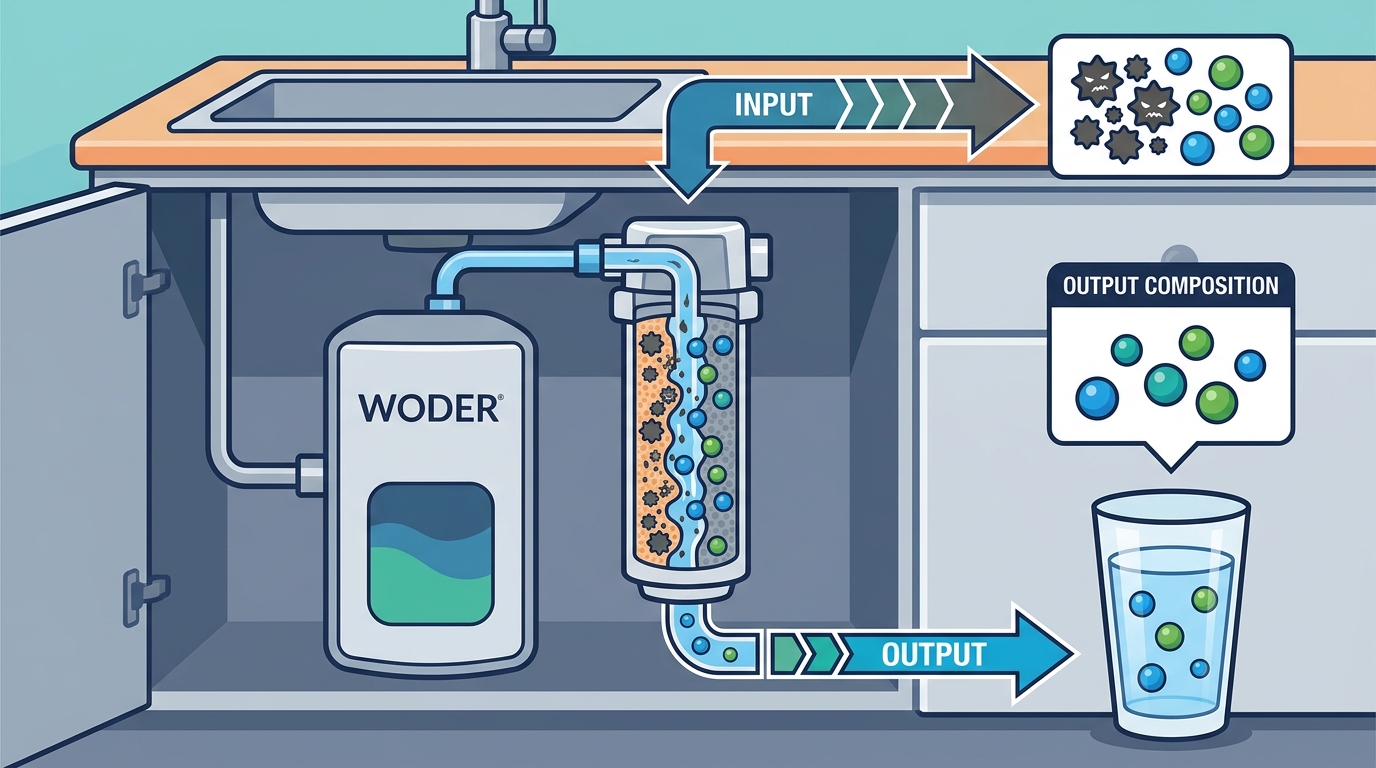
Selective filtration is a water treatment approach that targets and removes harmful contaminants while intentionally retaining naturally occurring minerals. Unlike methods that indiscriminately strip all dissolved solids, selective filtration uses specialized media with an affinity for pollutants such as lead, chlorine, VOCs, and PFAS. These media attract and bind contaminants but allow beneficial minerals like calcium, magnesium, and potassium to pass through.
The concept mirrors a principle researchers have studied for years. As noted in a 2025 medRxiv study on advanced filtration, impregnated filter media can create surface chemistry tailored to attract specific contaminants more efficiently than raw activated carbon. This selective binding capability is key to removing pollutants without eliminating everything else in the water.
Why Minerals in Drinking Water Matter
Minerals in drinking water are not just a nice-to-have. They play a measurable role in human health. The World Health Organization (WHO) has documented evidence that magnesium in drinking water may reduce the risk of ischemic heart disease mortality. Epidemiological research suggests health benefits may be associated with at least 20 to 30 mg/L of calcium and 10 mg/L of magnesium in drinking water.
Calcium and Bone Health
Calcium is the mineral most responsible for bone density and strength. Studies show that postmenopausal women who drink calcium-rich water have better bone health outcomes. Your body can absorb calcium from water as effectively as from dairy products, according to research cited by Healthline.
Magnesium and Heart Health
Magnesium is a cofactor in over 300 enzyme reactions in the body. It supports heart rhythm, helps control blood pressure, and aids muscle recovery. A filter that removes magnesium along with contaminants is working against your health.
The Risk of Demineralized Water
The WHO has an entire chapter dedicated to the health risks from drinking demineralized water. Removing all minerals from water is not a neutral act. It can contribute to mineral deficiency over time, especially for people who rely on water as a supplementary source of these nutrients.
The Problem with Reverse Osmosis
Reverse osmosis (RO) is a water purification method that forces water through a semipermeable membrane under pressure. It removes up to 95 to 99% of dissolved solids. That sounds impressive, but the issue is that RO does not distinguish between harmful contaminants and beneficial minerals. It removes everything.
RO systems also strip important minerals such as iron, calcium, and magnesium from water, as Green America reports. Additionally, RO systems waste significant amounts of water. Some systems discard up to 4 gallons for every gallon of purified water produced. That level of water waste is hard to justify for everyday household use.
Some RO manufacturers now add remineralization stages to reintroduce minerals after stripping them out. But this adds cost, complexity, and raises the question: why remove essential minerals only to add them back artificially?
Selective Filtration vs. Other Methods
Understanding how selective filtration compares to other common methods helps clarify why it is the healthiest choice for most households.
| Filtration Method | Removes Contaminants | Retains Minerals | Water Waste | Typical Use |
|---|---|---|---|---|
| Selective Filtration | 99.9% (lead, chlorine, PFAS, VOCs) | Yes | None | Under-sink, inline |
| Reverse Osmosis | 95-99% of dissolved solids | No | Up to 4:1 ratio | Under-sink |
| Activated Carbon | Chlorine, some VOCs, taste/odor | Yes | None | Pitcher, faucet-mount |
| UV Purification | Bacteria, viruses (99.99%) | Yes | None | Whole-house add-on |
| Ion Exchange | Hardness minerals, some metals | No (softens water) | Minimal | Whole-house softener |
Standard activated carbon filters improve taste and remove chlorine but are less effective against dissolved solids, bacteria, and heavy metals. UV purification eliminates pathogens but does nothing against chemical contaminants. Selective filtration offers the broadest contaminant removal without sacrificing mineral content or wasting water.
How Woder Uses Advanced Selective Filtration
Woder's proprietary Advanced Selective Filtration technology uses nanoparticles that have an affinity for contaminants but not for essential minerals. These nanoparticles attract and filter out 99.9% of contaminants including lead, heavy metals, chlorine, chromium 6, mercury, VOCs, PFAS, and carcinogens, while leaving in the naturally occurring minerals your body needs.
Built for Real Households
Woder offers under-sink and inline models designed for easy installation. The Gen4 WD-G4-210-DC, for example, removes 99.9% of lead, heavy metals, chlorine, chromium 6, VOCs, and PFAS. It fits under a standard kitchen sink and connects directly to your main faucet.
No Water Waste, No Electricity
Unlike RO systems that can waste thousands of gallons of water annually, Woder filters produce zero water waste. They require no electricity and no holding tank. Water flows on demand at up to 2 GPM.
Specialized Options
Woder also makes filters for specific concerns. The Fluoride Removal System provides up to 95% fluoride removal in addition to standard contaminant filtration. For homes with elevated heavy metal levels, the Heavy Metals Combo Filter combines advanced filtration with dedicated lead-removal media.
Key Takeaways
- Selective filtration is a method that removes harmful contaminants while preserving essential minerals in your drinking water.
- Minerals like calcium and magnesium in water support bone density, heart health, and over 300 enzyme functions in the body.
- Reverse osmosis removes nearly all dissolved solids, including beneficial minerals, and wastes up to 4 gallons per gallon filtered.
- The WHO has documented health risks associated with drinking demineralized water over time.
- Woder's Advanced Selective Filtration technology removes 99.9% of contaminants including lead, PFAS, and VOCs without stripping minerals.
- Woder filters require no electricity, produce zero water waste, and install under your sink in minutes.
- Standard carbon filters improve taste but miss many heavy metals and dissolved contaminants that selective filtration catches.
Frequently Asked Questions
What is selective filtration?
Selective filtration is a water treatment method that uses specialized media to target and remove harmful contaminants such as lead, chlorine, and PFAS while allowing beneficial minerals like calcium and magnesium to remain in the water.
How is selective filtration different from reverse osmosis?
Reverse osmosis pushes water through a membrane that removes nearly everything, including essential minerals. Selective filtration uses media with an affinity for contaminants only, so minerals stay in. RO also wastes significant water, while selective filtration does not.
Does selective filtration remove PFAS?
Yes. Woder's Advanced Selective Filtration removes PFAS along with lead, VOCs, chlorine, chromium 6, mercury, and other contaminants. Learn more about PFAS in tap water.
Are minerals in tap water really important for health?
Yes. Research published by the WHO shows that calcium and magnesium in drinking water may reduce the risk of heart disease. While food is the primary mineral source, water provides a consistent supplementary intake that adds up over time.
Do Woder filters require electricity or produce wastewater?
No. Woder filters operate on water pressure alone. They produce zero wastewater and need no electricity, unlike RO systems.
How long does a Woder filter last?
Woder filter cartridges carry a 1-year warranty and can handle thousands of gallons depending on the model. Check the filter lifespan guide for specifics.
Is a TDS meter a good way to test water quality?
Not necessarily. TDS meters measure total dissolved solids, which include beneficial minerals. A high TDS reading does not mean your water is unsafe, and a low reading does not mean it is healthy. Woder explains this in their TDS and water quality article.
Where can I buy a Woder filter?
You can purchase Woder filters directly from woder.com or through authorized retailers.
Get Started with Selective Filtration
Your water should be clean and mineral-rich. Not one or the other. Woder's Advanced Selective Filtration technology delivers both, removing 99.9% of contaminants while keeping the minerals your body needs. Explore the full lineup and find the right filter for your home at Choosing the Right Woder Filter.