

Why Does My Tap Water Taste Like Chlorine Even After Filtering?
You invested in a water filter expecting crisp, clean-tasting water, yet that unmistakable chlorine flavor persists. You are not imagining it. Several factors can explain why filtered water still tastes like a swimming pool, from the type of disinfectant in your supply to an expired filter cartridge. Understanding the root cause is the first step toward solving the problem for good. In this guide, we break down the science behind chlorine taste, explain why some filters fall short, and show you how to finally get the fresh water you deserve.
Why Is Chlorine in Tap Water?
Chlorine is a chemical disinfectant added to municipal water supplies to kill bacteria, viruses, and other pathogens. Water treatment facilities across the United States have relied on chlorination to maintain water safety for over a century. The chemical does its job during transit from the treatment plant to your home, but once it arrives at your faucet, it has already served its purpose.
While chlorine levels in tap water are regulated and generally safe, they produce that familiar "pool-like" taste and smell that many people find unpleasant. According to water quality experts, most people can detect chlorine at concentrations as low as 1.0 parts per million. Water utilities may increase chlorine dosing during summer months or after infrastructure repairs, which can make the taste even more pronounced.
Chlorine vs. Chloramine: The Hidden Culprit
Chloramine is a compound formed by combining chlorine and ammonia. It is increasingly used by municipalities because it is more stable and lasts longer in the distribution system. According to EPA data from 2016, roughly one in five Americans (about 68 million people) drink chloramine-treated water.
Here is the critical difference for filter owners: standard activated carbon filters handle chlorine effectively but often struggle with chloramine. Catalytic carbon is a specialized filter media chemically altered to break the chlorine-ammonia bond that makes chloramine so persistent. If your municipality uses chloramine and your filter only contains standard carbon, that chemical taste will likely remain.
How to Find Out What Your City Uses
Check your utility's annual Consumer Confidence Report, which lists the disinfectants used and their levels. You can also call your water provider directly or look up the report on their website. Knowing whether you have chlorine or chloramine is essential before choosing or troubleshooting a filter.
5 Reasons Your Filter Still Lets Chlorine Through
| Cause | Why It Happens | Solution |
|---|---|---|
| Expired cartridge | Old filters lose adsorption capacity and allow contaminants to pass through | Replace on schedule (typically every 12 months) |
| Wrong filter type | Sediment or basic carbon filters are not rated for chlorine or chloramine removal | Choose a filter specifically tested for chlorine reduction |
| Chloramine in supply | Standard carbon cannot break the stable chloramine bond | Upgrade to a filter with catalytic or advanced carbon media |
| High flow rate | Water passes through the media too quickly for full contact | Reduce flow or use a filter with adequate media volume |
| Elevated source levels | Seasonal spikes or infrastructure work increases disinfectant dosing | Install a higher-capacity filtration system |
Most of these issues are straightforward to diagnose. Start by checking whether your cartridge is within its rated lifespan, then verify which disinfectant your utility uses.
Which Filter Types Remove Chlorine Best?
Activated Carbon Filters
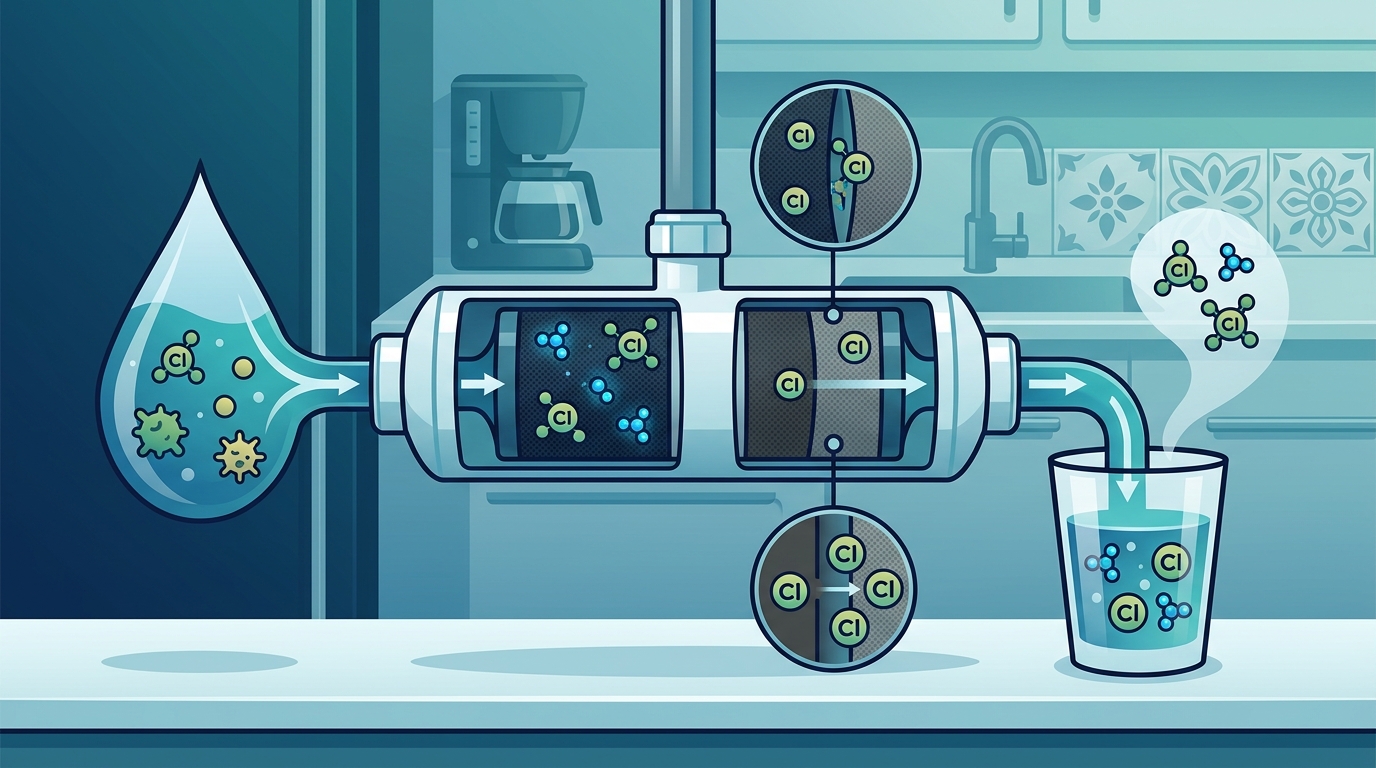
Activated carbon is the most common media for chlorine removal. It works by adsorbing chlorine molecules onto its surface as water flows through. Pitcher filters and basic faucet-mount units use this technology, but their small media volume limits effectiveness, especially against chloramine.
Under-Sink and Inline Systems
Point-of-use systems installed under the sink or inline with your refrigerator line offer greater media capacity and longer contact time. Woder's WD-G4-DC inline water filter removes 99.9% of chlorine, lead, heavy metals, and PFAS while retaining essential minerals. Its larger cartridge provides consistent performance for up to a full year.
Reverse Osmosis (RO) Systems
RO systems push water through a semi-permeable membrane and remove virtually all dissolved substances, including chlorine and chloramine. However, they also strip out beneficial minerals like calcium and magnesium, and they can waste thousands of gallons of water annually during the flushing process.
How Selective Filtration Solves the Problem
Selective Filtration is a proprietary technology developed by Woder that targets harmful contaminants while preserving the essential minerals your body needs. Unlike RO systems that remove everything indiscriminately, Woder filters use advanced media to selectively remove 99.9% of chlorine, lead, PFAS, VOCs, and other pollutants.
The result is water that tastes clean and fresh without the flat, "empty" flavor that comes from completely demineralized water. Minerals like calcium and magnesium contribute to a pleasant, natural taste profile, which is why many users describe Woder-filtered water as having a spring-like quality.
Woder offers both under-sink direct-connect models and inline John Guest models for refrigerators and ice makers. Every system is manufactured in the USA and comes with a one-year cartridge warranty.
Filter Maintenance Tips for Lasting Performance
Even the best filter will underperform without proper upkeep. Follow these practices to keep chlorine taste at bay:
- Replace cartridges on schedule. Woder cartridges carry a one-year warranty, but homes with high sediment may need earlier replacement. Learn more about choosing the right Woder filter for your water conditions.
- Flush new cartridges. Run water through a new filter for 5 to 10 minutes to clear manufacturing residue and trapped air.
- Test your water annually. A simple home test kit can confirm chlorine or chloramine levels and help you verify your filter is performing correctly.
- Watch for sediment issues. If your supply has high particulate levels, a dual-stage filtration system prevents premature clogging and extends the life of the primary cartridge.
Key Takeaways
- Chlorine is added to tap water as a disinfectant but causes an unpleasant taste once it reaches your home.
- Chloramine, a more stable compound of chlorine and ammonia, is harder to filter with standard activated carbon.
- Expired cartridges, wrong filter types, and high flow rates are the most common reasons filtered water still tastes like chlorine.
- Woder's Selective Filtration technology removes 99.9% of chlorine and contaminants while keeping beneficial minerals intact.
- Checking your utility's Consumer Confidence Report tells you whether your water contains chlorine or chloramine.
- Regular cartridge replacement and annual water testing are essential to maintaining great-tasting water.
- Under-sink and inline filters provide better chlorine removal than pitchers or faucet-mount units due to greater media volume and contact time.
Frequently Asked Questions
Why does my water still taste like chlorine after I installed a filter?
The most common causes are an expired cartridge, a filter not rated for chlorine removal, or chloramine in your water supply. Chloramine requires specialized media such as catalytic carbon or advanced selective filtration to remove effectively.
What is the difference between chlorine and chloramine?
Chlorine is a standalone disinfectant element. Chloramine is a compound made by combining chlorine with ammonia. Chloramine is more stable and lasts longer in water pipes, which makes it harder to filter with basic carbon.
How often should I replace my water filter cartridge?
Most quality cartridges, including Woder's Gen4 line, are warranted for one year. Homes with high sediment or heavy usage may need to replace sooner. Check your manufacturer's guidelines and monitor taste changes.
Does boiling water remove chlorine taste?
Boiling can reduce chlorine levels over 10 to 15 minutes, but it does not effectively remove chloramine. Filtration is a far more practical and reliable method for everyday drinking water.
Do Woder filters remove chloramine?
Woder's advanced filtration media is designed to remove chlorine and a wide range of contaminants. If you suspect chloramine in your supply, contact Woder's team to confirm the best model for your needs.
Will removing chlorine make my water unsafe?
No. Chlorine's disinfection job is complete by the time water reaches your tap. Removing it at the point of use does not reintroduce pathogens, and the water remains safe to drink.
What is Selective Filtration?
Selective Filtration is Woder's proprietary technology that removes 99.9% of harmful contaminants, including chlorine, lead, and PFAS, while leaving in essential minerals like calcium and magnesium that contribute to healthy, great-tasting water.
Are pitcher filters enough to remove chlorine?
Basic pitcher filters reduce chlorine to some degree, but their small cartridge size limits contact time and overall capacity. Under-sink or inline systems provide significantly better and longer-lasting chlorine reduction.
Take Control of Your Water Today
If chlorine taste is ruining your drinking water experience, the fix may be simpler than you think. Explore Woder's filter selection guide to find the right system for your home and start enjoying fresh, mineral-rich water from every glass.