

You installed a water filter expecting crisp, clean-tasting water. Instead, every sip still carries that unmistakable swimming-pool tang. You are not imagining it. Several factors can explain why your filtered water still tastes like chlorine, from an expired cartridge to chloramine in your municipal supply. Understanding the root cause is the first step toward solving it. In this post, we break down why chlorine persists after filtration, what chloramine is, how to pick the right filter, and when to call your water utility.
Why Is There Chlorine in Tap Water?
Chlorine is a chemical disinfectant added at water treatment plants to kill bacteria, viruses, and other pathogens before water travels through miles of pipes to your home. The CDC considers chlorine levels up to 4 parts per million (ppm) safe in drinking water. Over 98 percent of U.S. water systems that disinfect use chlorine.
The chemical does its job during transit, but once it reaches your faucet, it offers little additional benefit. That is why filtration at the point of use makes sense. As Woder notes in its guide to chlorine in tap water, the disinfectant is safe to remove through filtration because it has already served its purpose by the time it arrives at your sink.
The Chloramine Factor
Chloramine is a compound made by combining chlorine and ammonia. It is increasingly used by municipalities because it is more stable and lasts longer in distribution pipes. According to a 2016 EPA report, roughly one in five Americans (about 68 million people) drink chloramine-treated water.
Here is the critical point: standard activated carbon filters handle chlorine well but often struggle with chloramine. Chloramine requires significantly more contact time with the filter media, and basic pitcher or faucet-mount filters may remove as little as 20 percent of it. If your city uses chloramine, a basic filter will leave the chemical taste behind.
How to Check What Your City Uses
Your water utility publishes an annual Consumer Confidence Report (CCR) listing the disinfectants and their levels. You can also call your provider directly or check their website.
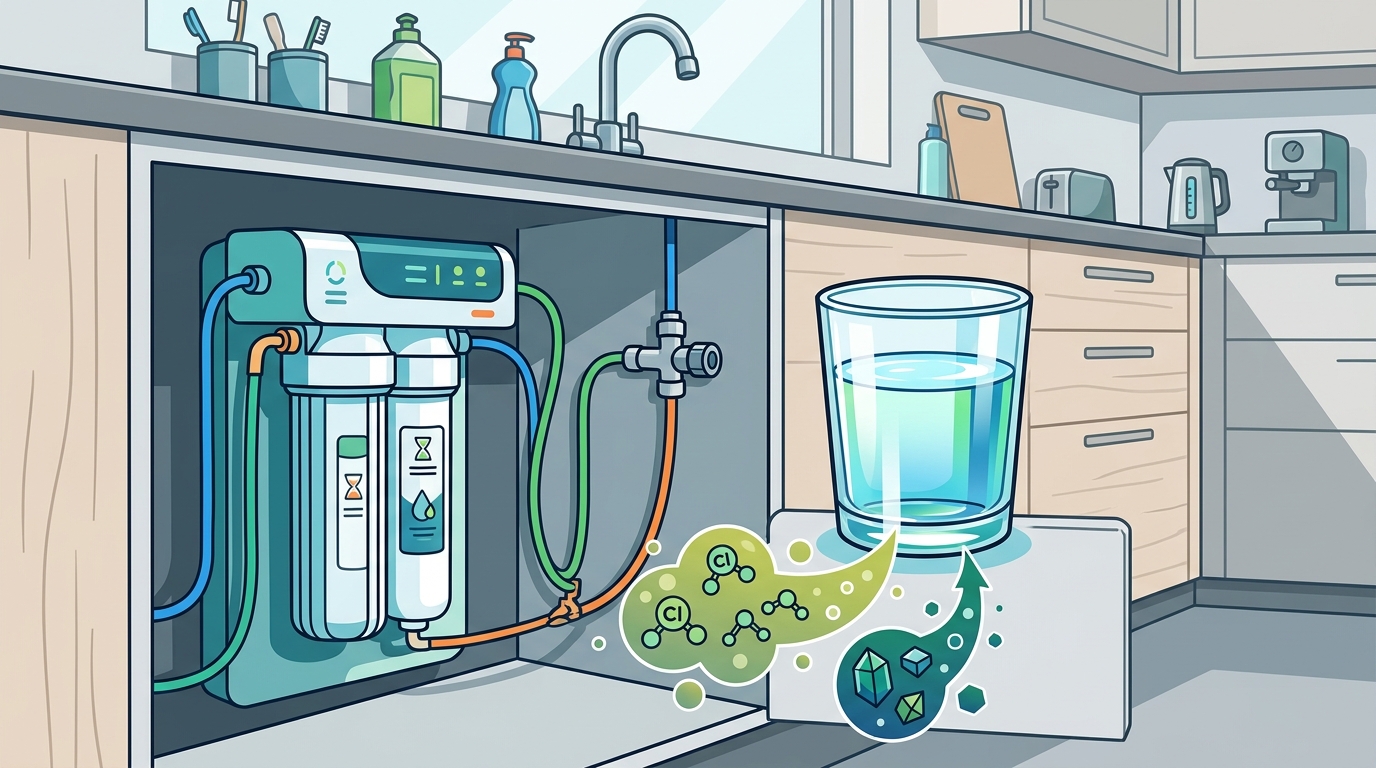
5 Reasons Your Filter Isn't Removing the Taste
1. Expired or Saturated Cartridge
Every filter cartridge has a lifespan. Once the media is saturated, contaminants pass through unimpeded. Woder cartridges, for example, carry a one-year warranty-backed lifespan. Replacing on schedule is essential.
2. Wrong Filter Type for Your Water
A sediment filter will not remove chlorine. A basic carbon pitcher may not remove chloramine. Matching the filter to your water chemistry is non-negotiable. Home test kits or lab analysis can reveal exactly what you are dealing with.
3. Insufficient Contact Time
Under-sized filters or high flow rates rush water past the media before it can adsorb chlorine or chloramine. Under-sink systems like the Woder WD-G4-2512-JG provide longer contact time than small pitcher cartridges.
4. New Filter Not Flushed
New carbon filters can release harmless carbon dust or trapped air that affects taste. Always flush a new filter by running water through it for 5 to 10 minutes before drinking.
5. High Sediment Clogging the Media
If your water supply has elevated sediment levels, particulate buildup can reduce filter effectiveness prematurely. A dual-stage filtration system with a dedicated sediment stage solves this problem.
Filter Types Compared: Chlorine vs. Chloramine Removal
| Filter Type | Chlorine Removal | Chloramine Removal | Minerals Retained? | Typical Cost |
|---|---|---|---|---|
| Basic Pitcher (carbon) | Good (up to 95%) | Poor (approx. 20%) | Yes | $20 - $40 |
| Faucet-Mount Carbon | Good | Limited | Yes | $25 - $60 |
| Under-Sink Carbon (e.g., Woder G4) | Excellent (99.9%) | Good (longer contact time) | Yes | $60 - $120 |
| Catalytic Carbon | Excellent | Excellent | Yes | $100 - $300+ |
| Reverse Osmosis (RO) | Excellent | Excellent | No | $150 - $500+ |
Selective Filtration is a proprietary technology used by Woder Filters that removes 99.9% of contaminants while retaining essential minerals like calcium and magnesium. Unlike RO systems, it does not strip minerals or waste thousands of gallons of water annually.
How to Fix Chlorine Taste for Good
Step 1: Test your water. Use a home test kit or request your utility's CCR to determine whether your supply uses chlorine or chloramine, and at what levels.
Step 2: Choose the right filter. For chlorine-only supplies, a quality activated carbon filter like the Woder WD-G4-210-JG inline filter removes 99.9% of chlorine, odors, and bad tastes. For chloramine supplies, look for catalytic carbon or advanced multi-stage systems.
Step 3: Replace cartridges on time. Mark your calendar. Most Woder cartridges last one year under warranty. A late replacement is the most common reason filtered water starts tasting off again.
Step 4: Flush new filters properly. Run water for at least five minutes after installation to clear carbon fines and air pockets.
When to Call Your Water Utility
Not every chlorine taste is routine. Contact your provider if:
- The chlorine smell appeared suddenly or intensified overnight.
- You notice a metallic taste alongside the chlorine, which could signal pipe corrosion.
- Water looks cloudy or discolored even after flushing the tap for several minutes.
- Family members experience recurring stomach issues after drinking tap water.
Your utility can perform tests or provide an up-to-date water quality report. You can also review the Woder guide on TDS meters and water quality to understand why simple TDS readings are not a reliable measure of safety.
Key Takeaways
- Chlorine is added to tap water for disinfection but serves no purpose once water reaches your home.
- Chloramine is a combination of chlorine and ammonia used by a growing number of U.S. cities; it is harder to filter than chlorine.
- Standard pitcher filters remove chlorine effectively but often fail against chloramine.
- An expired or mismatched cartridge is the most common reason filtered water still tastes like chlorine.
- Under-sink filters with longer contact time outperform small pitcher or faucet-mount units.
- Woder's Selective Filtration technology removes 99.9% of contaminants while preserving beneficial minerals.
- Always check your utility's annual Consumer Confidence Report to know what disinfectant is in your water.
Frequently Asked Questions
Why does my water still taste like chlorine after using a pitcher filter?
Pitcher filters use small carbon cartridges with limited contact time. They handle free chlorine reasonably well but struggle with chloramine, the disinfectant an increasing number of cities now use. Upgrading to an under-sink system provides longer contact time and more thorough removal.
Is chlorine in tap water dangerous?
At regulated levels (up to 4 ppm per CDC guidelines), chlorine is considered safe. However, it can produce disinfection byproducts when it reacts with organic matter, and many people find the taste and odor unpleasant.
What is the difference between chlorine and chloramine?
Chlorine is a single chemical element used as a disinfectant. Chloramine is a compound of chlorine and ammonia that is more stable, lasts longer in pipes, and is harder to remove with basic carbon filters.
How often should I replace my water filter cartridge?
Most quality under-sink filters, including Woder cartridges, should be replaced annually. Higher sediment levels may shorten that window. Follow the manufacturer's recommended schedule.
Does boiling water remove chlorine?
Boiling for 10 to 15 minutes can reduce free chlorine, but it does not effectively remove chloramine. Filtration is a faster and more reliable solution for both.
Do Woder filters remove chloramine?
Woder's advanced filtration media is designed for extended contact time, which improves chloramine reduction. For supplies with very high chloramine levels, pairing with a catalytic carbon pre-filter may be beneficial.
Will a water softener remove chlorine taste?
No. A water softener is designed to reduce hardness minerals like calcium and magnesium. It is not built to remove chlorine or chloramine. You need a dedicated water filter for that purpose. Learn more about the distinction in Woder's water softener vs. water filter guide.
Take Control of Your Water Today
If your filtered water still tastes like a swimming pool, the fix is straightforward: identify your disinfectant, choose the right filter, and stay on top of cartridge replacements. Woder's under-sink and inline filters use Selective Filtration technology to remove 99.9% of chlorine, lead, PFAS, and other contaminants while keeping essential minerals intact. Explore the Woder WD-G4-DC and start enjoying water the way it should taste.