
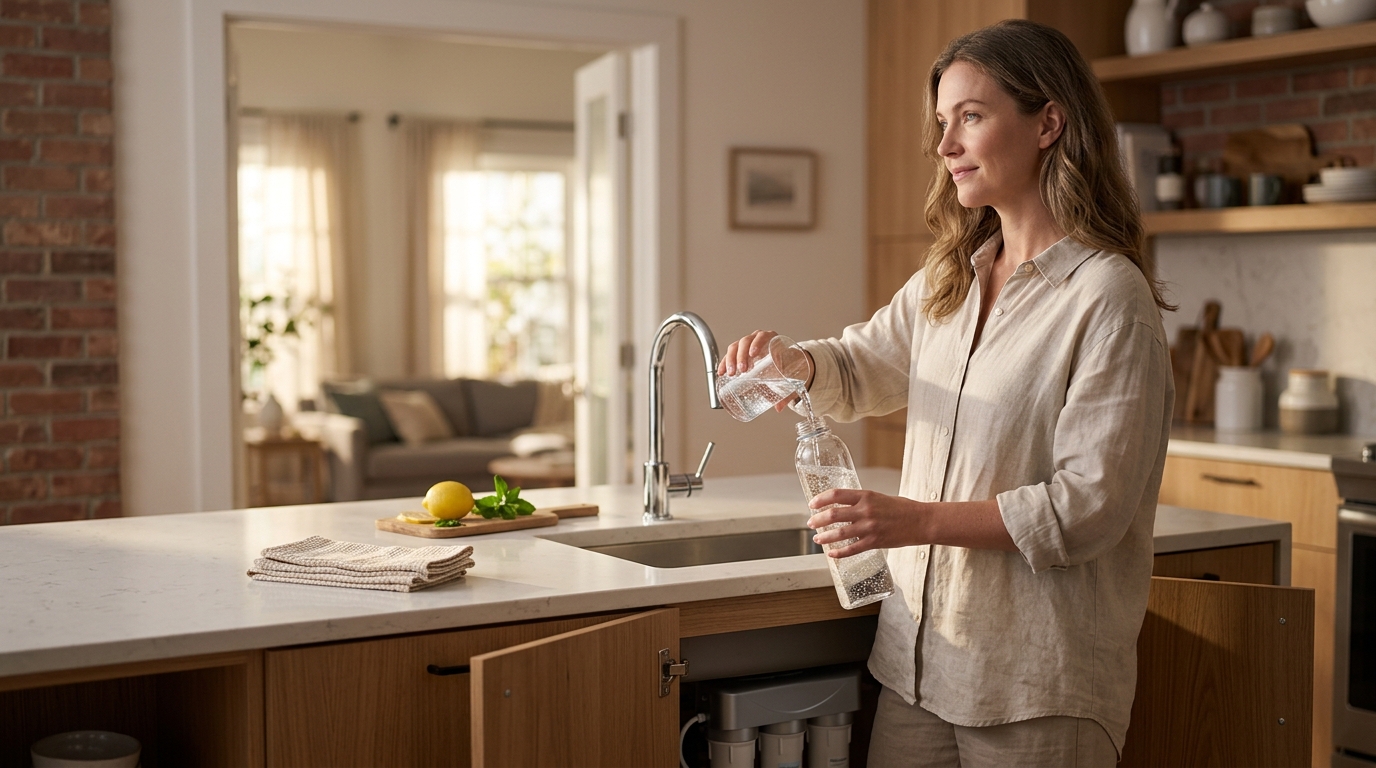
Choosing a water filter can feel overwhelming. Dozens of technologies, confusing jargon, and aggressive marketing claims make it hard to know which system actually fits your home. The truth is, the right water filter depends on what is in your water, how your plumbing is set up, and what contaminants you want to remove. This guide walks you through every step, from testing your tap water to picking the ideal filter type, so you can make a confident, informed decision and start drinking cleaner, healthier water today.
Why You Need a Water Filter in the First Place
Municipal water treatment keeps most pathogens at bay, but it does not catch everything. Chlorine, lead, PFAS (per- and polyfluoroalkyl substances), volatile organic compounds (VOCs), and disinfection byproducts can still reach your tap. In April 2024, the EPA finalized the first-ever enforceable federal limits for six PFAS chemicals in drinking water, setting maximum contaminant levels (MCLs) for PFOA and PFOS at just 4 parts per trillion.
Most refrigerator and pitcher filters only improve taste and clarity. As Woder explains in its pre-purchase guide, most water filters on the market today do not truly filter contaminants; they simply reduce odor and cloudiness. That gap between perceived safety and actual protection is exactly why choosing the right filter matters.
Step 1: Test Your Water
You cannot choose a filter until you know what you are filtering out. Every city publishes an annual Consumer Confidence Report (CCR), available free at EPA.gov. For a more detailed picture, order a certified home water test from a lab like SimpleWater's My Tap Score, which breaks results into plain language even kids can understand.
What to Look For in Your Results
- Chlorine and chloramine levels (taste and health)
- Lead and heavy metals (common with older plumbing)
- PFAS compounds (industrial contamination)
- Sediment, rust, or sand (well water or aging pipes)
- Fluoride levels (if you prefer to reduce them)
Once you know the specific contaminants in your water, you can match them to the correct technology rather than guessing.
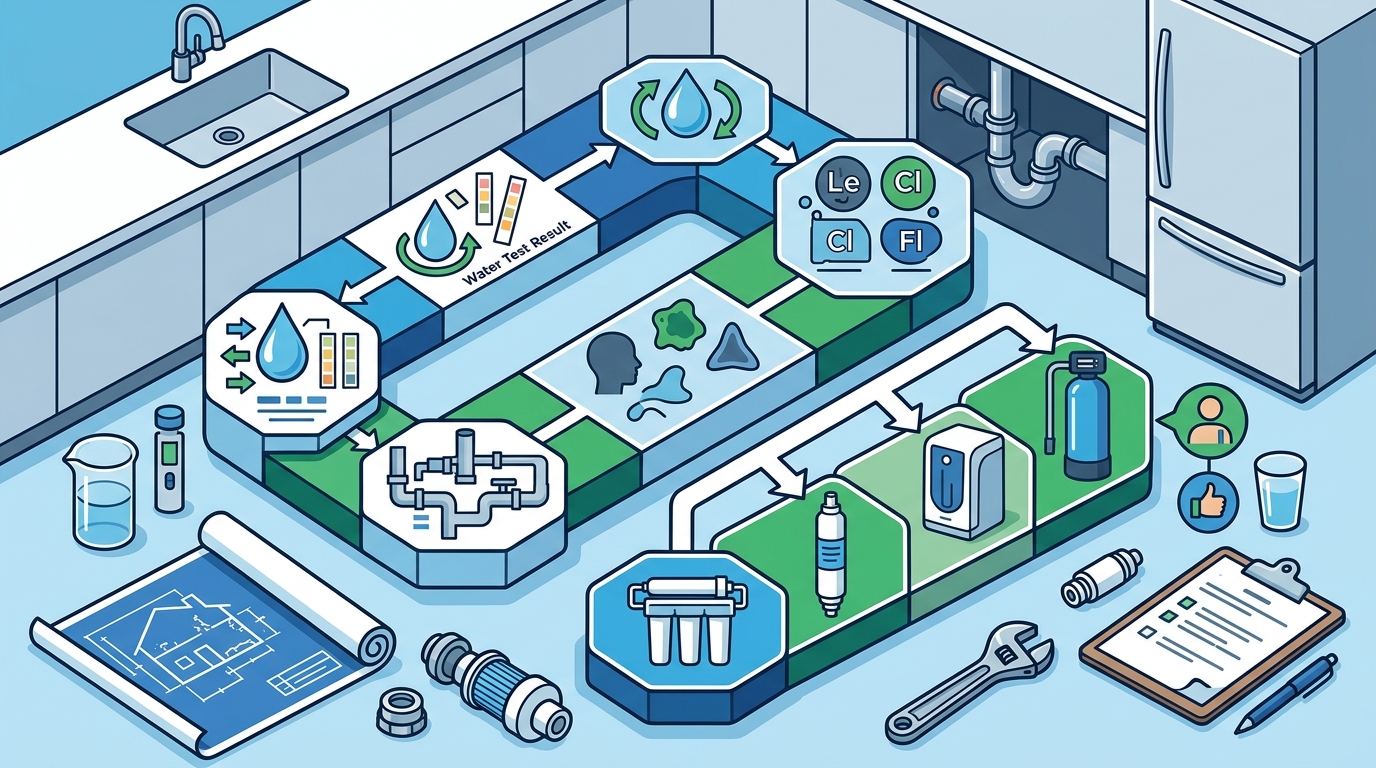
Understanding the Main Filter Types
A water filter is a device that removes contaminants from water using physical barriers, chemical reactions, or adsorption. Not all filter technologies target the same substances. Here is a quick comparison of the most common methods:
| Filter Type | Best For | Limitations | Typical Lifespan |
|---|---|---|---|
| Activated Carbon | Chlorine, VOCs, bad taste/odor | Does not remove dissolved minerals or salts | 6 - 12 months |
| Selective Filtration (e.g., Woder) | Lead, PFAS, heavy metals, chlorine while retaining minerals | Not designed for microbiological threats | Up to 1 year (warranty) |
| Reverse Osmosis (RO) | TDS, fluoride, heavy metals | Strips all minerals; wastes water | Membrane: 2 - 3 years |
| UV Disinfection | Bacteria, viruses, protozoa | Does not remove chemicals or particles | Bulb: ~1 year |
| Ceramic | Bacteria, cysts, sediment | Slow flow; limited chemical removal | 6 - 12 months |
Activated carbon is the most versatile starting point. It works through adsorption, where contaminants stick to the surface of the carbon media. However, for homes dealing with lead, PFAS, or elevated heavy metals, you need a more advanced formula. Learn more about how different water filters work to see the science behind each method.
How to Match Contaminants to the Right Filter
Matching contaminants to the correct certified technology is the single most important step. Here is a decision framework:
Chlorine Taste and Odor
Any quality activated carbon filter handles free chlorine effectively. If your utility uses chloramine instead, you need catalytic carbon with adequate contact time. Check your CCR to find out which disinfectant your city uses.
Lead, Heavy Metals, and PFAS
These require advanced media formulations. Woder's WD-G4-DC under-sink filter removes 99.9% of lead, heavy metals, chlorine, and PFAS using its proprietary Selective Filtration technology. If your test results show heavy metal levels above EPA recommendations, the WD-HMG4-JG heavy metals system adds an extra-strength removal formula.
Fluoride
Standard carbon filters do not reduce fluoride. Reverse osmosis or activated alumina are the proven methods. Woder's dual-stage fluoride removal system eliminates 95% of fluoride while also filtering lead, chlorine, and PFAS in a single setup.
Under-Sink vs. Inline Filters: Which Setup Is Right?
An under-sink filter is a point-of-use system installed below your kitchen sink that connects directly to your cold water line. It is ideal for filtering the water you drink and cook with every day. An inline filter is a compact system that connects via quick-connect fittings to 1/4-inch water supply lines, making it perfect for refrigerators, ice makers, and dedicated filtered-water faucets.
Choosing by Application
- Kitchen sink (drinking and cooking): Under-sink direct-connect models like the Woder WD-G4-DC connect to standard 3/8-inch water valves.
- Refrigerator or ice maker: Inline models like the Woder WD-G4-JG use John Guest quick-connect fittings for tool-free installation.
- High-sediment water: A dual-stage system pairs a sediment pre-filter with an advanced cartridge to prevent clogging and extend filter life.
Woder's flow rates consistently measure between 2 and 3 gallons per minute at 65 psi, so you will never have to wait around filling a glass.
Why Selective Filtration Matters
Selective Filtration is Woder's proprietary technology that targets harmful contaminants while preserving the beneficial minerals, like calcium and magnesium, that your body needs. Reverse osmosis systems also achieve 99.9% contaminant removal, but they strip away all dissolved minerals, producing water with a flat taste and a very low TDS reading.
The WHO recommends essential mineral intake through drinking water, and reintroducing calcium and magnesium aligns with those guidelines. With Selective Filtration, you skip the remineralization step entirely because those minerals never leave your water in the first place. RO systems can also waste thousands of gallons of water annually, an environmental and cost concern that Woder's technology avoids.
Woder filters use a granular formula with six different micro-ground and blended media rather than layered carbon blocks. This design delivers broad-spectrum contaminant removal without the flow-rate penalties of tightly packed block filters. Annual cartridge replacement costs start at just $48, making long-term ownership affordable. Explore the full range of Woder filtration systems to compare models side by side.
Key Takeaways
- Always test your water before buying a filter. Your CCR and a home test kit reveal exactly which contaminants to target.
- Most pitcher and refrigerator filters only improve taste; they do not remove heavy metals or PFAS.
- Match your contaminants to the right filter technology. Carbon handles chlorine; advanced media handles lead and PFAS.
- Selective Filtration removes 99.9% of contaminants while keeping essential minerals intact, unlike reverse osmosis.
- Under-sink filters are best for drinking and cooking water; inline filters serve refrigerators, ice makers, and RVs.
- Dual-stage systems are recommended for homes with elevated sediment, fluoride, or heavy metal levels.
- Replace cartridges on schedule. An expired filter may release captured contaminants back into your water.
Frequently Asked Questions
How do I know what contaminants are in my water?
Start with your city's free Consumer Confidence Report at EPA.gov. For a deeper analysis, use a certified mail-in test kit. Well water users should test annually, as private wells are not regulated like public systems.
Do I need a water filter if I have city water?
Yes. Municipal treatment removes pathogens but often leaves chlorine, lead from aging pipes, PFAS, and disinfection byproducts. A quality point-of-use filter addresses what your water utility does not.
What is the difference between a water filter and a water softener?
A water filter removes contaminants like lead, chlorine, and chemicals to make water safer to drink. A water softener uses ion exchange to remove calcium and magnesium that cause scale buildup. Neither does the other's job, and many homes benefit from both. Read more about water softeners vs. water filters.
Is reverse osmosis better than selective filtration?
Both achieve 99.9% contaminant removal. However, RO strips all minerals and wastes significant water. Selective Filtration retains beneficial minerals and produces zero wastewater, making it a more balanced choice for most households.
How long does a Woder filter last?
Woder cartridges carry a 1-year warranty. Actual lifespan depends on your water quality and usage volume. Homes with heavy sediment should consider a dual-stage setup to extend cartridge life. Learn more about water filter lifespan factors.
Can I install a Woder filter myself?
Yes. Under-sink direct-connect models attach to standard 3/8-inch cold water valves, and inline models use tool-free John Guest quick-connect fittings. Most installations take under 10 minutes with no plumbing experience required.
What if I have both high sediment and high lead levels?
Woder recommends a dual-stage system that pairs a 20-micron sediment pre-filter with an advanced filtration cartridge. This protects the primary filter from clogging while still removing lead, PFAS, and other dissolved contaminants.
Are Woder filters made in the USA?
Yes. Woder filters are designed and manufactured in the United States using proprietary granular media blends developed for the American market.
Find Your Perfect Filter
Not sure which Woder system matches your water? Use the Woder Wizard, a quick interactive tool that asks a few simple questions about your water source, plumbing, and filtration goals, then recommends the ideal system for your home. It takes less than two minutes, and it could save you hours of research and hundreds of dollars on the wrong filter.