

Choosing a water filter can feel overwhelming. With dozens of filter types on the market, from pitcher filters to under-sink systems and whole-house units, picking the right one depends on your water quality, household size, and specific contaminant concerns. The EPA finalized its first-ever enforceable limits for PFAS chemicals in drinking water in April 2024, making filtration more important than ever. This guide walks you through every factor you need to consider so you can confidently choose the water filter that fits your home and your health goals.
Know What Is in Your Water
Before you buy any filter, test your water. A Consumer Confidence Report (CCR) is an annual water quality summary your local utility is required to provide, available free at EPA.gov. It tells you which contaminants are present in your municipal supply and at what levels.
For a more detailed picture, order a certified home water test kit. Basic kits cost around $30 to $50, while comprehensive lab panels range from $100 to $150. Well water users should test annually since private wells are not regulated by the EPA.
Common Contaminants to Watch For
The most frequently flagged concerns in U.S. tap water include chlorine, lead, PFAS (forever chemicals), chromium 6, mercury, and volatile organic compounds (VOCs). Sediment from aging pipes, such as rust and dirt, is another common issue that can shorten your filter's lifespan if not addressed.
Understanding Water Filter Types
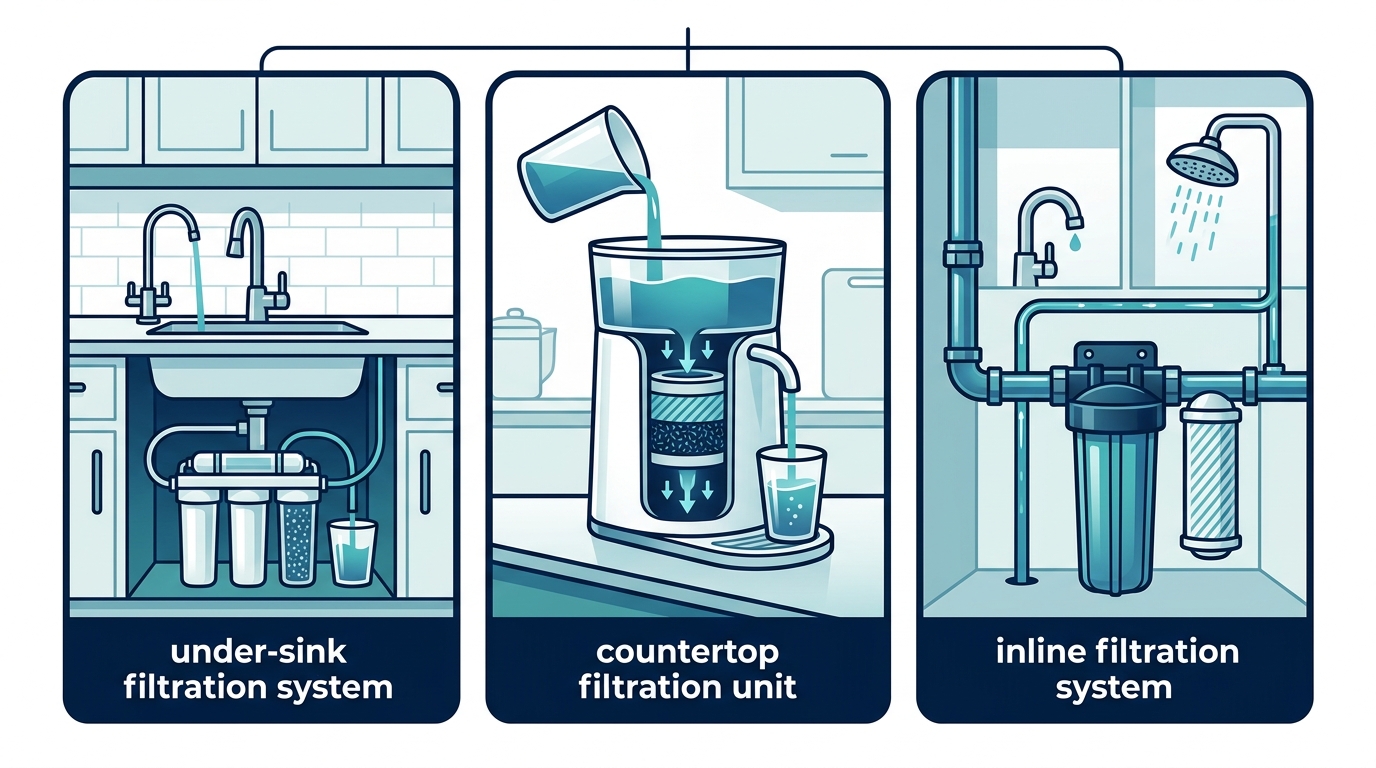
A point-of-use (POU) filter is a system that treats water at a single tap, such as your kitchen sink, rather than your entire home. These include pitcher filters, faucet-mount filters, and under-sink systems. A point-of-entry (POE) filter, also called a whole-house filter, connects to your main water supply and treats every drop entering your home.
Under-Sink Filters
Under-sink filters sit beneath your kitchen counter and connect directly to your cold water line. They offer strong contaminant removal without taking up counter space. The Woder WD-G4-210-DC is a popular option for homes with low sediment levels, removing 99.9% of lead, heavy metals, chlorine, and chromium 6.
Inline Filters
Inline filters connect to 1/4-inch water supply lines feeding refrigerators, ice makers, and dedicated faucets. The Woder WD-G4-JG uses Advanced Selective Filtration to remove PFAS, lead, mercury, VOCs, and other contaminants while retaining essential minerals like calcium and magnesium.
Sediment Pre-Filters
If your water supply contains elevated sediment from old plumbing or nearby construction, a dedicated sediment filter protects your primary filter from premature clogging. The Woder WD-20m-DC sediment filter captures dirt, sand, rust, and debris at 20 microns before water reaches your main filtration stage.
Match Contaminants to the Right Technology
Not every filter removes every contaminant. Activated carbon filters excel at removing chlorine taste and odor. Carbon block filters with proper certification handle lead effectively. Only reverse osmosis and activated alumina filters significantly reduce fluoride. If fluoride is a concern, a dual-stage system like the Woder Fluoride Removal System provides up to 95% fluoride removal combined with Gen4 advanced contaminant filtration.
For PFAS removal, the EPA set enforceable maximum contaminant levels (MCLs) of 4.0 parts per trillion for both PFOA and PFOS in its April 2024 regulation. Even with compliance deadlines extended to 2031, proactive homeowners are adding point-of-use filters now to reduce exposure immediately.
Why Selective Filtration Matters
Selective Filtration is a proprietary technology developed by Woder that removes 99.9% of contaminants while leaving in naturally occurring essential minerals. This is a critical distinction from reverse osmosis systems, which strip out everything, including beneficial calcium and magnesium your body needs.
RO systems also waste thousands of gallons of water annually during the flushing process. Woder filters produce zero wastewater, making them both healthier and more environmentally friendly. Learn more about how RO compares to selective filtration on the Woder blog.
Choosing the Right Filter Capacity
Filter capacity is the total volume of water a filter can treat before needing replacement. An undersized filter leads to frequent replacements and higher long-term costs. A general guideline is 0.5 to 1 gallon per person per day for drinking and cooking, meaning a family of four uses roughly 2 to 4 gallons daily.
Woder filters are designed exclusively for municipal water and typically maintain pressure and filtration quality for two to three years under regular use. Each cartridge carries a one-year warranty as the minimum expected service period. Avoid using these filters with well water, hot water, or softened water, as these conditions can reduce lifespan.
Water Filter Comparison Table
| Filter Type | Best For | Removes PFAS | Retains Minerals | Avg. Lifespan | Water Waste |
|---|---|---|---|---|---|
| Pitcher Filter | Renters, basic chlorine taste | Some models | Yes | 1-2 months | None |
| Faucet-Mount Filter | Budget-friendly POU | Rarely | Yes | 2-4 months | None |
| Under-Sink (Carbon/Selective) | Comprehensive POU filtration | Yes (Woder Gen4) | Yes | 1-3 years | None |
| Inline Filter | Refrigerators, ice makers | Yes (Woder Gen4) | Yes | 6-12 months | None |
| Reverse Osmosis | High TDS, maximum removal | Yes | No | 2-5 years (membrane) | High |
| Whole-House Sediment | Sediment, rust, debris | No | Yes | 3-6 months | None |
Key Takeaways
- Always test your water before selecting a filter. Request your free CCR or order a certified lab test.
- Match your contaminants to the right filtration technology; no single filter type handles every problem.
- Under-sink and inline filters with Selective Filtration remove 99.9% of contaminants while preserving essential minerals.
- Reverse osmosis removes nearly everything but also strips beneficial minerals and wastes significant water.
- For fluoride concerns, choose a dedicated fluoride removal system like Woder's dual-stage FRM filter.
- Filter capacity and lifespan depend on your water quality, usage volume, and sediment levels.
- With the EPA's PFAS drinking water standards now in effect, a quality POU filter offers immediate protection at home.
Frequently Asked Questions
How do I find out what contaminants are in my water?
Request your annual Consumer Confidence Report (CCR) from your local water utility or download it from EPA.gov. For deeper analysis, order a certified home water test kit from a lab. This is the most reliable way to know exactly what your filter needs to target.
Do I need a whole-house filter or a point-of-use filter?
Point-of-use filters treat water at one tap and are ideal for drinking and cooking. Whole-house filters treat every tap and primarily target sediment. Many households benefit from both: a sediment pre-filter for the whole house and a POU filter at the kitchen sink.
What is Selective Filtration?
Selective Filtration is Woder's proprietary technology that uses nanoparticles with an affinity for contaminants but not for essential minerals. It removes 99.9% of harmful substances like lead, chlorine, PFAS, and VOCs while retaining calcium, magnesium, and other minerals your body needs.
How often do I need to replace my water filter?
It depends on the filter type and your water quality. Woder filters typically maintain performance for two to three years, with cartridges warranted for one year. Pitcher filters need replacing every one to two months. RO membranes last two to five years.
Can I use a Woder filter with well water?
No. Woder filters are designed exclusively for municipal (city) water. Well water contains bacteria, high sediment, and variable contaminants that require specialized treatment such as UV sterilization or whole-house RO systems.
Does a water filter remove PFAS?
Not all filters remove PFAS. Activated carbon block filters and reverse osmosis systems are effective. Woder Gen4 filters remove PFAS along with lead, heavy metals, chlorine, and other contaminants. The EPA set enforceable PFAS limits at 4.0 ppt for PFOA and PFOS in April 2024.
Is reverse osmosis better than carbon filtration?
RO provides the most thorough removal but also strips beneficial minerals and wastes water. Carbon-based and selective filtration systems remove the vast majority of contaminants while keeping healthy minerals intact, offering a better balance for everyday drinking water.
How do I install a Woder under-sink filter?
Woder under-sink filters with Direct Connect (DC) fittings require no plumbing modifications. They attach directly to standard 3/8-inch water valves under your sink. Most installations take fewer than 10 minutes. Visit the Woder filter selection guide for help choosing the right model.
Find Your Perfect Filter
Clean, mineral-rich drinking water should not be complicated. Start by testing your water, then match your contaminants to the right Woder filter. Whether you need a single-stage under-sink system, an inline filter for your refrigerator, or a dual-stage fluoride removal setup, Woder's US-made filters deliver 99.9% contaminant removal without stripping the minerals your body needs. Explore the full Woder filter lineup and take control of your water today.