
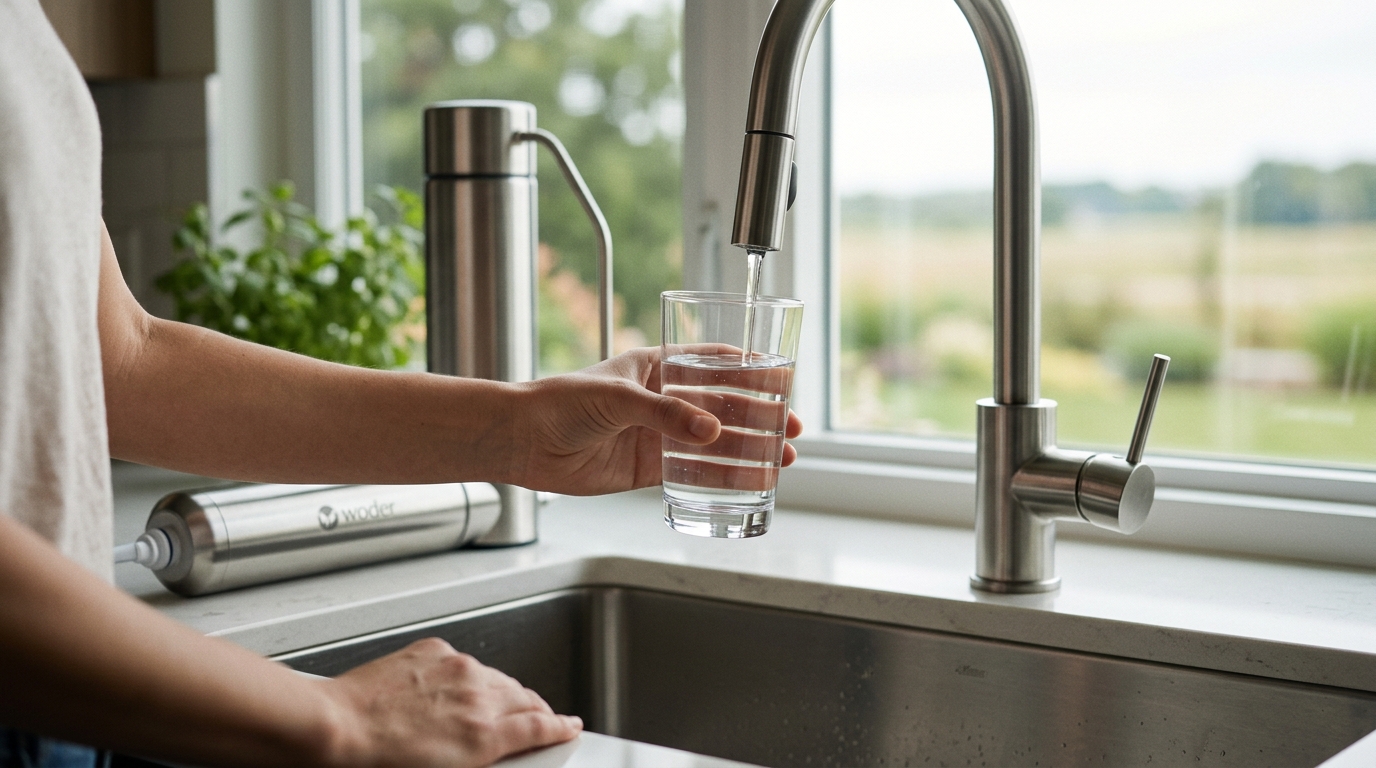
Choosing the right water filter can feel overwhelming. With dozens of filter types on the market, from simple pitcher filters to advanced under-sink systems, the decision comes down to understanding your water quality, your household needs, and the contaminants you want to remove. The good news is that picking the right filter does not require a chemistry degree. This guide walks you through every factor that matters, including water testing, filtration technologies, installation types, and how to match a filter to your specific situation. By the end, you will know exactly which water filter fits your home and budget.
Why You Need a Water Filter in 2025
Municipal water treatment has improved dramatically over the decades, but it does not catch everything. In April 2024, the EPA finalized the first-ever National Primary Drinking Water Regulation for six PFAS compounds, often called "forever chemicals." PFAS have been linked to cancer, liver damage, and developmental harm in children. Even with these new standards, compliance deadlines stretch to 2029 or later, meaning your tap water may still contain elevated levels right now.
Beyond PFAS, common concerns include lead from aging pipes, chlorine byproducts, volatile organic compounds (VOCs), and heavy metals like mercury and chromium 6. A quality water filter is your first line of defense at the point of use, removing threats that treatment plants leave behind.
Step 1: Test Your Water Quality
Before buying any filter, find out what is actually in your water. The CDC recommends testing your water and choosing a filter that targets the specific contaminants present. You have several options for testing.
Review Your Consumer Confidence Report
A Consumer Confidence Report (CCR) is an annual water quality summary your municipal utility must provide. It lists detected contaminants and how they compare to EPA standards. Check your utility's website or request a copy directly.
Use an EPA-Certified Lab
For deeper analysis, especially for lead and PFAS, send a sample to an EPA-certified lab. This is essential if you rely on well water or suspect pipe corrosion. You can locate a certified lab through the EPA's Safe Drinking Water Hotline at 800-426-4791.
At-Home Test Kits
An at-home test kit is a quick screening tool available at most home improvement stores. These kits are useful for basic parameters like pH and chlorine but lack the accuracy of lab analysis for contaminants like lead, arsenic, and PFAS.
Understanding Water Filter Types
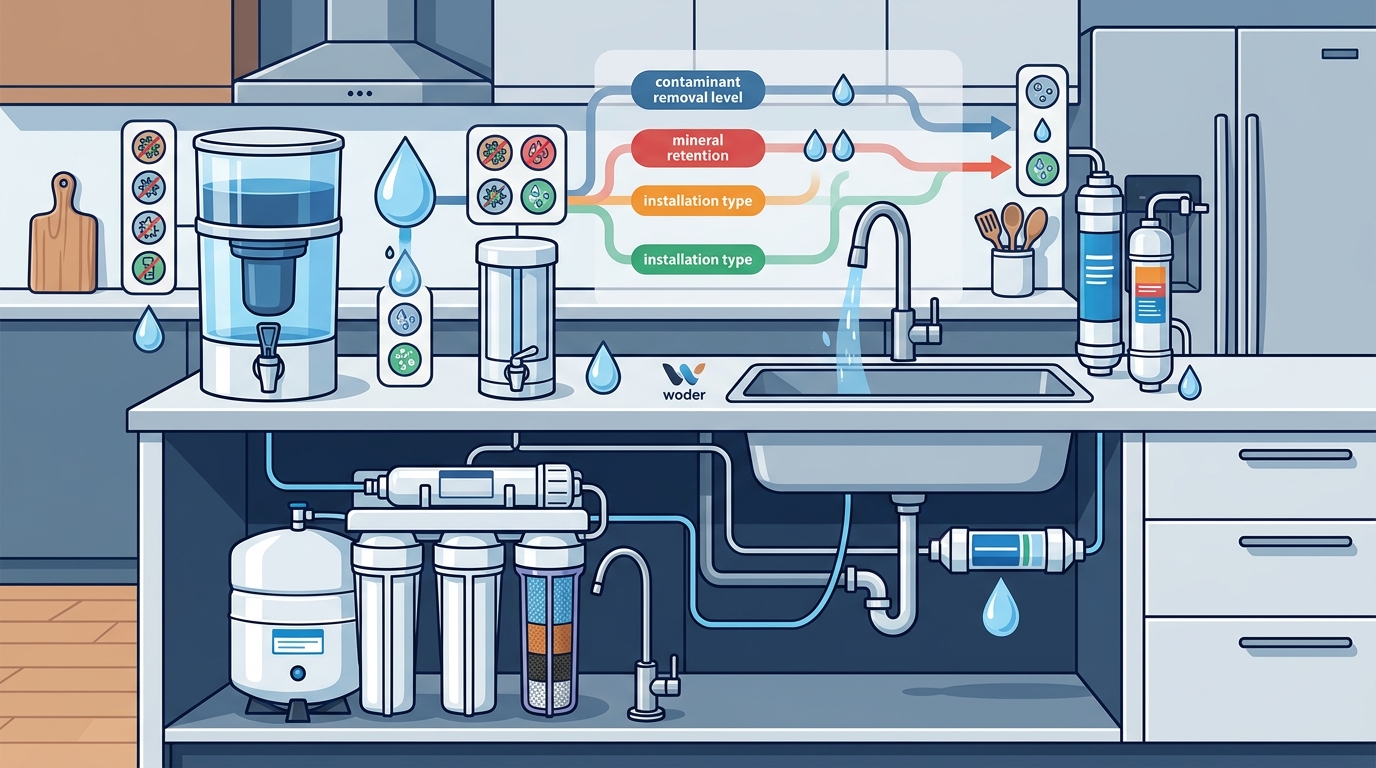
A water filter is a device that removes impurities from water through physical, chemical, or biological processes. Different types suit different needs and installation scenarios.
Under-Sink Filters
Under-sink filters install beneath your kitchen sink and connect directly to the cold-water line. They provide filtered water on demand without cluttering counter space. Models like the Woder WD-G4-210-DC connect directly to your main faucet with no plumbing modifications required, making them popular for both homeowners and renters.
Inline Filters
An inline water filter is a compact unit that attaches to existing water supply lines, typically 1/4-inch tubing for refrigerators, ice makers, or dedicated faucets. The Woder WD-G4-JG inline filter uses Quick Connect fittings for tool-free installation and removes PFAS, 99.9% of lead, heavy metals, chlorine, and VOCs.
Pitcher and Faucet-Mounted Filters
Pitcher filters and faucet-mounted filters are budget-friendly entry points, typically ranging from $15 to $90. However, they offer limited contaminant removal compared to under-sink or inline systems and require cartridge replacement every two to three months.
Matching Filters to Common Contaminants
The right filter depends entirely on what you need to remove. Here is a quick contaminant-to-filter guide:
- Lead and heavy metals: Advanced carbon or selective filtration under-sink systems handle these effectively.
- PFAS (forever chemicals): Look for filters specifically tested for PFAS removal, such as Woder's Gen4 Advanced filters.
- Chlorine, taste, and odor: Most activated carbon filters address these basic concerns.
- Fluoride: Specialized media is needed. A dual-stage system like the Woder Fluoride Removal and Advanced Dual Filtration System provides up to 95% fluoride removal plus comprehensive contaminant filtration.
- Sediment, dirt, and rust: A dedicated sediment pre-filter, such as the Woder WD-20m-DC Sediment Filter, catches particles before they reach your main filter.
Filter Comparison: Key Specs at a Glance
| Filter Type | Contaminants Removed | Cartridge Life | Retains Minerals | Typical Cost Range |
|---|---|---|---|---|
| Pitcher Filter | Chlorine, some taste/odor | 2-3 months | Yes | $15 - $90 |
| Faucet-Mounted | Chlorine, some lead | 2-3 months | Yes | $15 - $80 |
| Under-Sink (Selective Filtration) | Lead, PFAS, VOCs, chlorine, heavy metals | 1-3 years | Yes | $60 - $200 |
| Inline (Selective Filtration) | Lead, PFAS, VOCs, chlorine, heavy metals | 1-3 years | Yes | $50 - $150 |
| Reverse Osmosis | Nearly all contaminants | 6-12 months (membrane) | No | $150 - $600+ |
Why Selective Filtration Matters
Selective Filtration is a proprietary technology developed by Woder Filters that removes 99.9% of contaminants while leaving in essential minerals like calcium and magnesium. This is a critical distinction from reverse osmosis systems, which strip out every mineral along with contaminants.
Reverse osmosis (RO) systems also waste significant amounts of water. According to the EWG's Water Filter Guide, RO systems require three to five times more water than they produce, with the excess flowing down the drain. Over a year, that can mean thousands of gallons wasted. Selective Filtration avoids this entirely by operating without a drain line.
Woder filters are manufactured in the USA and designed exclusively for municipal water. They typically maintain pressure and filtration quality for two to three years under regular use, with cartridges backed by a one-year warranty. If your water has elevated sediment levels, pairing your main filter with a Woder sediment pre-filter prevents clogging and extends the primary cartridge's lifespan.
Key Takeaways
- Always test your water before choosing a filter. Your CCR or an EPA-certified lab test reveals which contaminants to target.
- Under-sink and inline filters provide the most comprehensive contaminant removal for homes on municipal water.
- Selective Filtration removes 99.9% of contaminants while preserving beneficial minerals that RO systems strip away.
- PFAS are a growing concern. The EPA finalized its first drinking water standard for six PFAS compounds in April 2024.
- Pitcher and faucet-mounted filters are affordable but limited in scope and require frequent cartridge changes.
- Sediment pre-filters protect your primary filter from clogging, especially in areas with older plumbing or construction activity.
- Woder Gen4 filters remove lead, PFAS, chlorine, chromium 6, mercury, and VOCs with a cartridge lifespan of one to three years.
Frequently Asked Questions
How do I know what contaminants are in my water?
Start by reviewing your utility's Consumer Confidence Report, which is published annually. For a more detailed analysis, send a sample to an EPA-certified lab. This is especially important for testing lead and PFAS levels, which may not appear in standard utility reports.
What is Selective Filtration?
Selective Filtration is a technology used by Woder Filters that targets and removes harmful contaminants like lead, PFAS, and chlorine while retaining naturally occurring minerals such as calcium and magnesium. It uses nanoparticles with a chemical affinity for contaminants but not for essential minerals.
Do I need a sediment pre-filter?
If your water supply has elevated sediment, rust from old plumbing, or disturbances from nearby construction, a sediment pre-filter is recommended. It prevents particulate buildup from shortening your main filter's life. Learn more about choosing the right Woder filter for your setup.
How long does a water filter last?
It depends on the type. Pitcher filters last two to three months. Under-sink and inline filters with higher capacities can last six months to three years. Woder filters are designed for municipal water and typically perform well for two to three years, with cartridges warranted for at least one year.
Is reverse osmosis better than carbon filtration?
RO removes the widest range of contaminants but also strips essential minerals and wastes significant water. Carbon-based and selective filtration systems remove the most harmful contaminants while preserving mineral content and producing zero wastewater. Read more about the differences in our reverse osmosis guide.
Can I install an under-sink filter myself?
Yes. Most under-sink filters, including Woder's direct-connect models, are designed for DIY installation in under 10 minutes. They connect to standard 3/8-inch water valves without plumbing tools or modifications.
Are Woder filters certified?
Woder's contaminant removal claims are tested by CLB Labs. Some models, like the WD-S-5K-ADV-DC, carry a WQA Gold Seal certification. All Woder filters are manufactured in the USA.
What is the difference between a water filter and a water softener?
A water filter removes contaminants like lead, chlorine, and PFAS to make water safer to drink. A water softener uses ion exchange to reduce calcium and magnesium, which cause hard water buildup. They serve different purposes, and some households benefit from both. Explore the full breakdown in our water softener vs. water filter article.
Take Control of Your Water Today
Clean, mineral-rich drinking water should not be complicated. Browse Woder's full line of US-made water filters to find the right system for your home. Every filter ships with easy-install fittings and a one-year cartridge warranty, so you can start enjoying pure, healthy water in minutes.