

Choosing the right water filter can feel overwhelming. With dozens of filter types on the market, from pitcher filters to under-sink systems to whole-house units, narrowing down the best option for your home requires understanding your water quality, your household size, and the specific contaminants you want to remove. This guide walks you through every factor you need to consider so you can make a confident, informed decision. Whether you are worried about lead, PFAS, chlorine, or sediment, we will help you match the right filtration technology to your exact needs.
Why You Need a Water Filter in 2026
Drinking water quality has become a growing concern across the United States. On April 10, 2024, the EPA finalized the first-ever National Primary Drinking Water Regulation for six PFAS compounds, setting enforceable maximum contaminant levels (MCLs) of 4 parts per trillion for PFOA and PFOS. This landmark regulation underscores just how seriously the federal government takes these "forever chemicals."
Beyond PFAS, municipal water supplies can contain chlorine, lead from aging infrastructure, volatile organic compounds (VOCs), and heavy metals. A point-of-use water filter is your most practical and affordable line of defense at the kitchen tap.
Step 1: Test Your Water
Before purchasing any filter, you need to know what is actually in your water. A Consumer Confidence Report (CCR) is a free annual water quality report that your municipal utility is required to provide. You can request yours through the EPA's CCR portal.
For a more detailed picture, order a certified mail-in test kit, which typically costs $30 to $150. Well water users should test annually for bacteria, nitrates, and heavy metals. Knowing your contaminants is the single most important step in choosing the right filter.
Understanding Water Filter Types
A water filter is a device that removes impurities from water using a physical barrier, chemical process, or biological process. Not all filters are created equal, and the right choice depends on where you install it and what you need to remove.
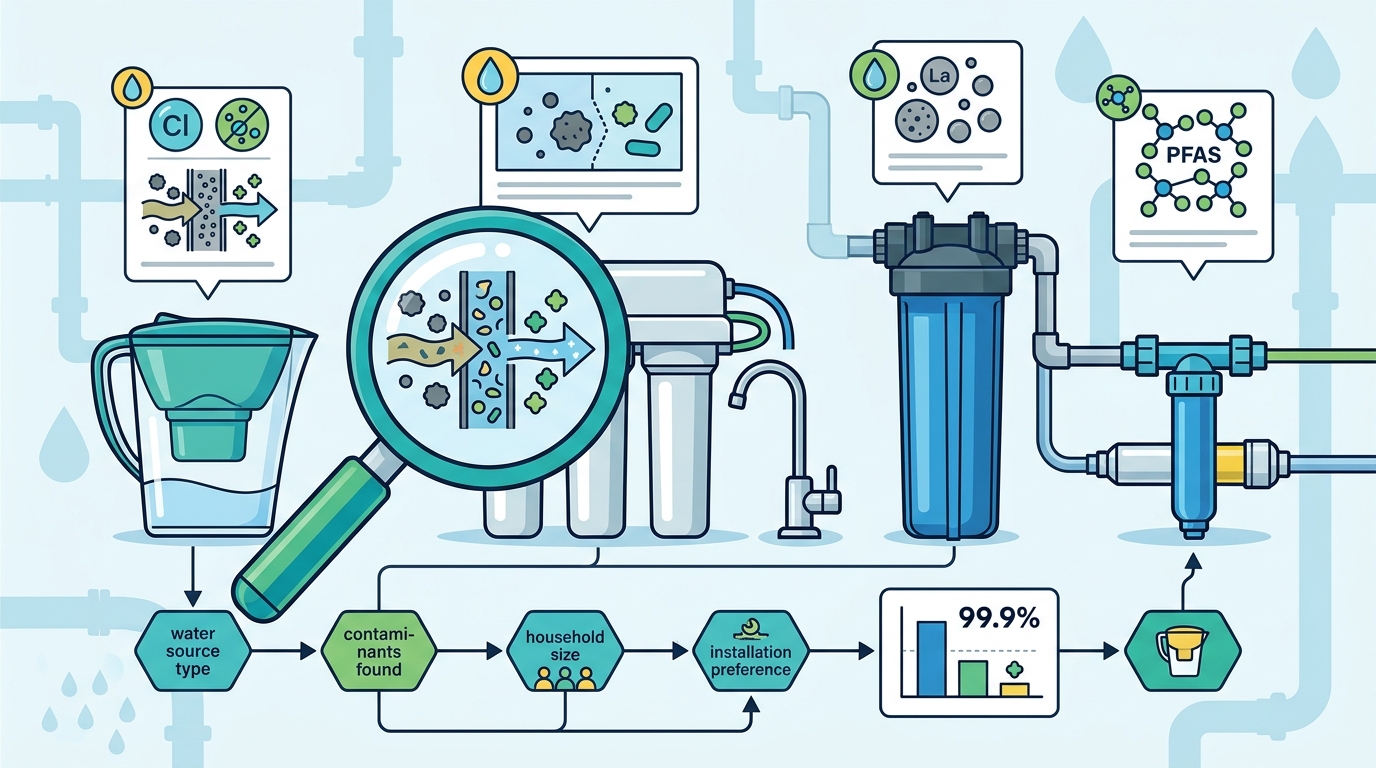
Pitcher Filters
Pitcher filters use gravity to pass water through a small activated carbon cartridge. They are affordable and require no installation, making them ideal for renters. However, they offer limited contaminant removal and require frequent cartridge changes every two to three months.
Under-Sink Filters
Under-sink filters connect directly to your cold-water supply line and deliver filtered water through your existing faucet or a dedicated tap. They offer significantly higher capacity and better contaminant removal than pitchers. Woder's WD-G4-JG inline water filter, for example, removes 99.9% of lead, PFAS, chlorine, chromium 6, mercury, and VOCs while retaining essential minerals like calcium and magnesium.
Reverse Osmosis (RO) Systems
Reverse osmosis is a filtration method that forces water through a semipermeable membrane to remove dissolved solids. RO systems remove up to 99% of contaminants but also strip out all beneficial minerals, and they can waste thousands of gallons of water annually. Modern tankless RO units have improved efficiency, but the mineral-stripping tradeoff remains.
Matching Contaminants to the Right Technology
Once you know what is in your water, match those contaminants to a proven filtration method. The table below provides a quick reference.
| Contaminant | Recommended Technology | Certification to Look For |
|---|---|---|
| Chlorine taste and odor | Activated carbon / Selective Filtration | NSF/ANSI 42 |
| Lead | Carbon block, Selective Filtration, RO | NSF/ANSI 53 |
| PFAS (PFOA, PFOS) | Activated carbon (GAC), RO, Selective Filtration | NSF/ANSI P473 |
| Fluoride | Activated alumina, RO | NSF/ANSI 53 |
| Sediment (sand, rust) | Sediment pre-filter (1-20 micron) | NSF/ANSI 42 |
| Bacteria and parasites | UV sterilization, RO, ultrafiltration | NSF/ANSI 55 |
| VOCs and pesticides | Activated carbon, Selective Filtration | NSF/ANSI 53 |
If your water has elevated sediment levels, consider adding a Woder sediment pre-filter as a first stage to protect your primary filter from clogging and extend its lifespan.
Why Selective Filtration Matters
Selective Filtration is a proprietary technology developed by Woder Filters that removes 99.9% of contaminants while leaving in naturally occurring essential minerals. This is a critical distinction. Standard RO systems strip out everything, including calcium and magnesium that your body needs and that contribute to water's refreshing taste.
According to WHO guidelines, drinking water with adequate mineral content supports essential mineral intake. Woder's approach aligns with this by using nanoparticles that have an affinity for contaminants but not for beneficial minerals, delivering clean water that still tastes fresh and natural.
For households concerned about fluoride, the Woder Fluoride Removal and Advanced Dual Filtration System provides up to 95% fluoride removal in addition to comprehensive contaminant filtration in a two-stage design.
How to Choose the Right Filter for Your Home
Consider Your Water Source
Municipal water and well water present very different challenges. Woder filters are designed exclusively for municipal (city) water. If you are on well water, you will need specialized treatment for bacteria and high sediment levels before using a point-of-use filter.
Match Filter Size to Household Usage
A family of four typically uses 2 to 4 gallons of drinking and cooking water daily. Woder's Gen4 filters, such as the WD-G4-210-DC, are built for homes with low sedimentation levels and offer a one-year cartridge warranty with typical performance lasting two to three years under regular use.
Think About Long-Term Cost
Filter cost is not just the purchase price. Factor in annual cartridge replacements and water waste. Woder cartridges carry a one-year warranty and are designed for easy DIY replacement. To learn more about filter longevity, read our guide on how long a water filter lasts.
Key Takeaways
- Always test your water before buying a filter. Request your free CCR or order a certified lab test.
- Match the filter technology to your specific contaminants, not just general claims.
- Selective Filtration removes 99.9% of contaminants while preserving essential minerals, unlike RO systems that strip everything out.
- Under-sink and inline filters offer the best balance of capacity, convenience, and contaminant removal for most households.
- Sediment pre-filters extend the life of your primary filter and are essential for water with high particulate levels.
- EPA finalized enforceable PFAS drinking water standards in April 2024, making PFAS-capable filters more important than ever.
- Woder filters are made in the USA, install in under 10 minutes, and require no plumbing modifications.
Frequently Asked Questions
What is the best type of water filter for home use?
For most households on municipal water, an under-sink or inline filter with advanced carbon or selective filtration technology provides the best combination of contaminant removal, flow rate, and mineral retention. Woder's Gen4 filters remove 99.9% of lead, PFAS, chlorine, and VOCs while keeping beneficial minerals intact.
Do I need a water filter if I have city water?
Yes. Municipal water is treated but can still contain chlorine, lead from aging pipes, PFAS, and other contaminants by the time it reaches your tap. A point-of-use filter adds a critical final layer of protection.
What is Selective Filtration?
Selective Filtration is Woder's proprietary technology that uses specially engineered nanoparticles to attract and remove contaminants while allowing essential minerals like calcium and magnesium to pass through. It delivers mineral-rich, clean water without the waste associated with reverse osmosis.
How often do I need to replace my water filter?
Most under-sink and inline filters last 6 to 12 months on average. Woder filters typically maintain pressure and filtration quality for two to three years under regular use, with cartridges carrying a one-year warranty.
Is reverse osmosis better than carbon filtration?
RO removes a wider range of dissolved solids, but it also removes all minerals and wastes significant water. Advanced carbon and selective filtration systems can match RO on key contaminants like lead and PFAS while retaining healthy minerals and producing zero wastewater.
What contaminants should I be most concerned about?
Lead, PFAS (forever chemicals), chlorine byproducts, and VOCs are among the most common and harmful contaminants in U.S. drinking water. The EPA's 2024 PFAS regulation set MCLs of 4 parts per trillion for PFOA and PFOS, highlighting the urgency of filtration.
Can I install a Woder filter myself?
Yes. Woder filters are designed for DIY installation in under 10 minutes with no plumbing expertise required. Direct-connect models attach to standard 3/8-inch water valves found under most U.S. kitchen sinks.
What if my water has high sediment levels?
If your water supply contains elevated sediment from old plumbing or nearby construction, a dual-stage system with a sediment pre-filter is recommended. Woder offers dedicated sediment removal filters that pair with their advanced filtration cartridges.
Find the Right Woder Filter for Your Home
Ready to take control of your water quality? Explore the full Woder Filters lineup to find the system that matches your water, your home, and your health goals. Every Woder filter is made in the USA, installs in minutes, and removes 99.9% of contaminants while keeping the minerals your body needs. Visit The Woder Blog for more water quality tips and guides.