

Choosing the right water filter can feel overwhelming when dozens of technologies, brands, and price points compete for your attention. The truth is, the best filter for your home depends on what is actually in your water, how much you use, and where you plan to install it. A point-of-use (POU) water filter is a device installed at a single tap to remove contaminants from drinking water before it reaches your glass. This guide walks you through every factor you need to consider so you can confidently pick a system that keeps your family safe without wasting money on features you do not need.
Start by Testing Your Water
Before you spend a dollar on filtration, find out what you are filtering. The EPA requires community water systems to publish an annual Consumer Confidence Report (CCR) detailing detected contaminants. You can request yours by July 1 each year or search for it online through the EPA's CCR tool.
A Consumer Confidence Report is an annual water quality document your local utility must deliver to customers. It lists contaminant levels, source water information, and any violations. For a deeper look, order a certified mail-in test kit, which typically costs $30 to $150 and screens for metals, PFAS, and other pollutants your CCR may not cover in detail.
Understanding Water Filter Types
Not every filter tackles the same problems. Here is a quick comparison of the most common residential options:
| Filter Type | Best For | Avg. Lifespan | Retains Minerals? |
|---|---|---|---|
| Activated Carbon (Under-Sink) | Chlorine, taste, odor, VOCs | 6-12 months | Yes |
| Selective Filtration (e.g., Woder Gen4) | Lead, PFAS, chlorine, heavy metals | 1-3 years | Yes |
| Reverse Osmosis (RO) | TDS, fluoride, dissolved solids | 6-12 months (membrane 2-3 yrs) | No |
| Sediment Pre-Filter | Sand, rust, dirt, silt | 3-6 months | N/A |
| UV Purification | Bacteria, viruses | Annual bulb replacement | Yes |
Activated carbon filters excel at removing chlorine and improving taste. Reverse osmosis systems provide thorough contaminant reduction but strip out beneficial minerals and can waste significant water. Selective Filtration is a proprietary technology, used by Woder Filters, that removes 99.9% of contaminants while retaining essential minerals like calcium and magnesium.
Match Contaminants to the Right Technology
Once you know what is in your water, pair each contaminant with the technology proven to remove it.
Chlorine and Taste Issues
Any quality activated carbon or selective filtration system handles free chlorine effectively. If your utility uses chloramine instead, you need catalytic carbon or a system specifically rated for chloramine reduction. Check your CCR to confirm which disinfectant your city uses.
Lead, PFAS, and Heavy Metals
These are among the most dangerous drinking water contaminants. The Woder WD-G4-JG inline filter removes PFAS, 99.9% of lead, chromium 6, mercury, and volatile organic compounds. For households concerned about heavy metals, the Woder WD-G4-2512-JG adds extra heavy metal removal media for areas with elevated contamination.
Fluoride
Standard carbon filters do not reduce fluoride. You need either reverse osmosis or an activated alumina stage. The Woder Dual-Stage Fluoride Removal System provides up to 95% fluoride removal in its first stage while the Gen4 second stage handles lead, PFAS, chlorine, and more.
Why Selective Filtration Matters
Reverse osmosis systems remove 99.9% of contaminants, but they also strip out all minerals found in tap water, including minerals your body needs. Worse, RO systems can waste thousands of gallons of water annually while flushing contaminants down the drain.
Woder's Selective Filtration technology takes a different approach. Its nanoparticles have an affinity for contaminants but not for essential minerals. They attract and filter out 99.9% of harmful substances while leaving in naturally occurring calcium, magnesium, and other minerals that contribute to healthy, great-tasting water. The result is water that tastes like premium mineral water straight from your tap.
According to World Health Organization guidelines, calcium and magnesium in drinking water contribute to essential mineral intake. Stripping them out, as RO does, removes a beneficial dietary source many people rely on without realizing it.
Choosing the Right Filter Capacity
Filter capacity is the total volume of water a system can treat before replacement is needed. An undersized filter leads to frequent cartridge changes and higher long-term costs.
The general guideline is 0.5 to 1 gallon per person per day for drinking and cooking. A family of four uses roughly 2 to 4 gallons daily. Woder filters are designed exclusively for municipal water and typically maintain pressure and filtration quality for two to three years under regular use, with cartridges backed by a one-year warranty as the minimum expected service period.
For homes with elevated sediment levels, a dual-stage system that pairs a sediment pre-filter with an advanced filtration cartridge prevents premature clogging and extends overall filter life.
Installation Options: Under-Sink vs. Inline
Direct Connect (Under-Sink)
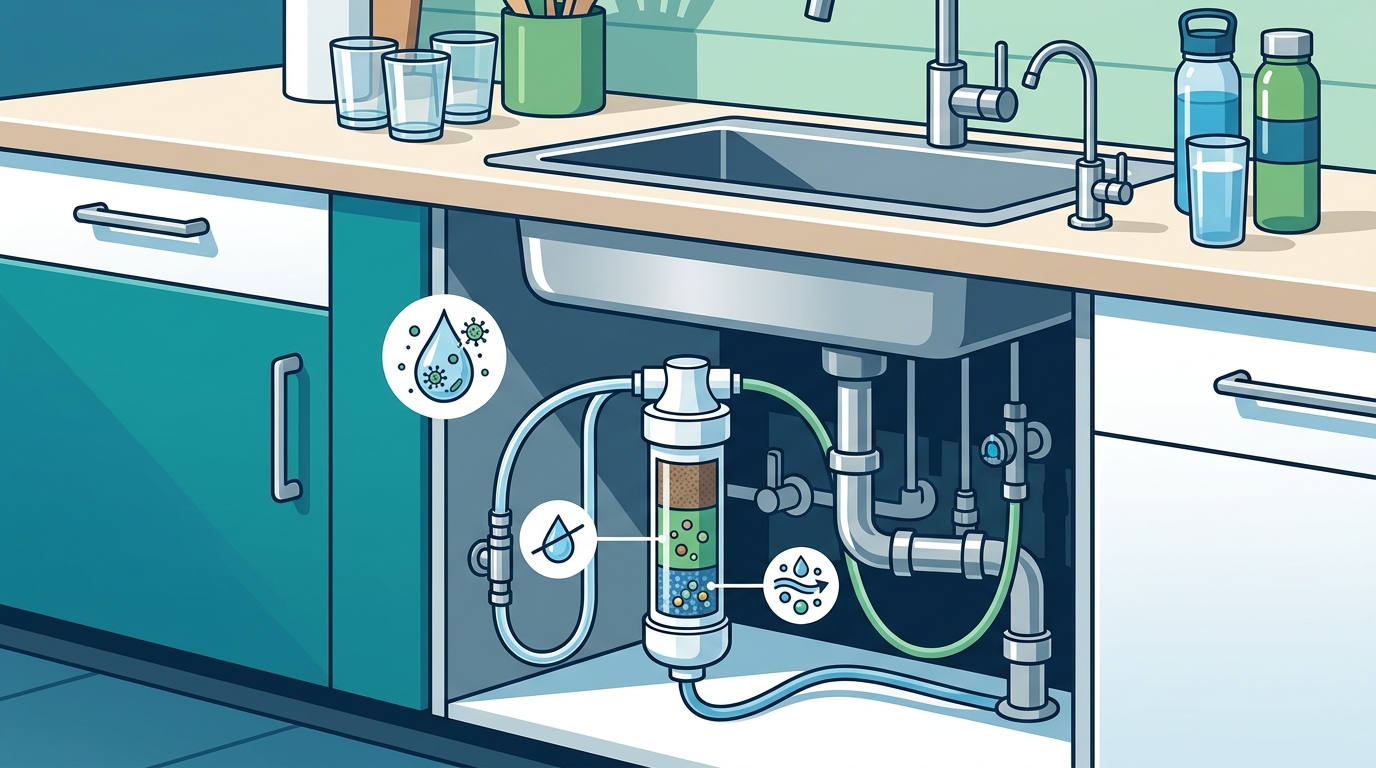
Under-sink filters like the Woder WD-G4-210-DC connect directly to your existing cold-water valve and faucet stem using standard 3/8-inch fittings. No plumbing modifications are required. Installation typically takes under 10 minutes.
Inline (John Guest Quick Connect)
Inline models such as the Woder WD-G4-JG use 1/4-inch John Guest fittings and attach to plastic flex tubing or flexible copper tubing. These are ideal for refrigerator water lines, ice makers, RVs, and dedicated filtered-water faucets.
Sediment Pre-Filtration
If your water supply has rust from old plumbing, nearby construction activity, or naturally high sand levels, adding a Woder WD-20m sediment filter upstream prevents particulate buildup and protects your primary filtration cartridge.
Key Takeaways
- Always test your water before buying a filter. Your city's free CCR is the fastest starting point.
- Match each contaminant to the right filtration technology rather than buying the most expensive system available.
- Selective Filtration removes 99.9% of contaminants while keeping essential minerals intact, unlike reverse osmosis.
- RO systems waste thousands of gallons of water per year and strip beneficial minerals from your drinking water.
- Woder filters install in under 10 minutes with no plumbing expertise and last up to three years under normal municipal water conditions.
- Homes with high sediment should add a dual-stage system with a dedicated pre-filter to protect filter life.
- For fluoride concerns, choose a specialized fluoride removal stage paired with advanced contaminant filtration.
Frequently Asked Questions
How do I find out what contaminants are in my water?
Request your annual Consumer Confidence Report from your local water utility or search the EPA's CCR database. For tap-specific results, order a certified mail-in water test kit.
What is the difference between a water filter and a water softener?
A water filter removes contaminants such as chlorine, lead, and PFAS through filtration and adsorption. A water softener removes hardness minerals like calcium and magnesium using ion exchange. They solve different problems, and many homes benefit from both. Learn more in our water softener vs. water filter guide.
Do Woder filters work with well water?
No. Woder filters are designed exclusively for municipally treated water. Using them with well water, hot water, softened water, or salty water can reduce lifespan and damage connectors.
How long does a Woder filter last?
Woder cartridges come with a one-year warranty, but under regular municipal water use, they typically maintain filtration quality for two to three years. Lifespan depends on local water quality and daily usage volume.
Does Selective Filtration remove fluoride?
Standard Selective Filtration cartridges do not remove fluoride. For fluoride reduction, choose the Woder Dual-Stage Fluoride Removal System, which eliminates up to 95% of fluoride alongside 99.9% of lead, PFAS, and other contaminants.
Can I install a Woder filter myself?
Yes. Both under-sink and inline Woder models are designed for DIY installation in under 10 minutes. Direct Connect systems attach to standard 3/8-inch valves, and John Guest models use push-fit 1/4-inch connectors. No plumbing tools are needed.
Why should I choose Selective Filtration over reverse osmosis?
Selective Filtration matches RO's 99.9% contaminant removal rate but retains essential minerals like calcium and magnesium. RO strips all minerals, produces flat-tasting water, and wastes significant amounts of water during the filtration process.
What if my water has high sediment levels?
Add a sediment pre-filter upstream of your main filtration cartridge. Woder offers 20-micron sediment filters in both Direct Connect and John Guest configurations to handle sand, rust, dirt, and silt before they reach your primary filter.
Find the Right Woder Filter for Your Home
Ready to stop guessing and start filtering? Visit the Woder Filters store to browse under-sink and inline systems built with Selective Filtration technology. Every filter is made in the USA, installs in minutes, and removes 99.9% of contaminants while keeping the minerals your body needs. Choose your filter today and take control of your water.