

Choosing the right water filter can feel overwhelming when dozens of technologies, certifications, and brands compete for your attention. The truth is, the best filter for your home depends on your water source, the contaminants present, and how you plan to use the filtered water. In the United States alone, approximately 176 million people are exposed to PFAS in their drinking water. This guide walks you through every factor so you can make a confident, informed decision and start drinking cleaner water today.
Step 1: Test Your Water First
Before spending a dollar on filtration, find out what is actually in your water. If you are on municipal water, request your free Consumer Confidence Report (CCR) from your utility or download it from EPA.gov. For a more detailed picture, order a certified mail-in test kit, which typically costs between $30 and $150.
A Consumer Confidence Report is an annual water quality summary that your local utility is required to provide. It lists regulated contaminants detected in your supply, including lead, chlorine byproducts, and PFAS. Testing is especially critical right now because the EPA is actively revising federal PFAS drinking water standards, with compliance deadlines potentially extending to 2031.
Understanding Water Filter Types
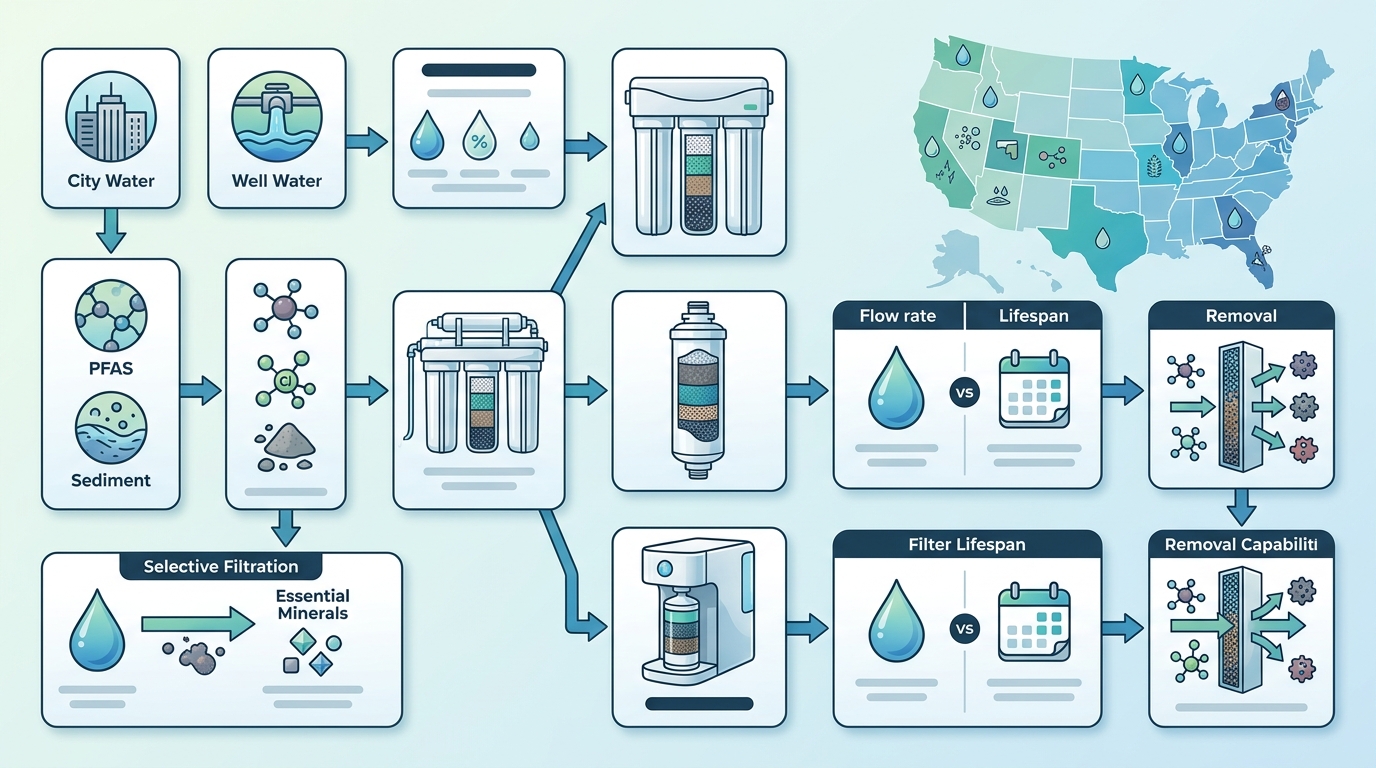
Not every filter addresses the same problem. Here is a quick overview of the most common types and where they fit in a home.
Under-Sink Filters
An under-sink filter is a point-of-use (POU) system installed beneath your kitchen sink that treats water at a single tap. These are ideal for drinking and cooking water and typically last 6 to 12 months per cartridge, with higher-capacity models lasting much longer. Woder's WD-G4-JG inline water filter falls into this category, removing 99.9% of lead, PFAS, chlorine, and other contaminants while retaining essential minerals.
Inline Filters
Inline filters connect directly to 1/4-inch water supply lines feeding refrigerators, ice makers, and dedicated faucets. They require no plumbing modifications and are simple to replace. The Woder WD-G4-2512-JG is an advanced inline option that combines contaminant removal with heavy metal reduction media.
Sediment Pre-Filters
A sediment pre-filter is a mechanical filter designed to remove physical particles like sand, rust, silt, and dirt before water reaches your primary filtration stage. If your water has elevated sediment levels, pairing a Woder WD-20m-JG sediment filter with an advanced contaminant filter extends the life of both systems.
Matching Contaminants to Filter Technology
Once you know what is in your water, match those contaminants to the right technology. The table below summarizes the most common concerns and the filtration methods proven to address them.
| Contaminant | Recommended Technology | Relevant Standard |
|---|---|---|
| Chlorine taste and odor | Activated carbon / Selective Filtration | NSF/ANSI 42 |
| Lead | Carbon block, Selective Filtration, RO | NSF/ANSI 53 |
| PFAS (forever chemicals) | Selective Filtration, RO, activated carbon | NSF/ANSI P473 |
| Fluoride | Activated alumina, RO | NSF/ANSI 53 |
| Sediment (sand, rust) | Mechanical / sediment pre-filter | NSF/ANSI 42 |
| Bacteria and viruses | UV sterilization, RO, ultrafiltration | NSF/ANSI 55 |
| Heavy metals (mercury, chromium 6) | Selective Filtration, RO | NSF/ANSI 53 |
If fluoride removal is a priority, consider a dual-stage system like the Woder Fluoride Removal and Advanced Dual Filtration System, which provides up to 95% fluoride reduction alongside comprehensive contaminant removal.
Selective Filtration vs. Reverse Osmosis
Two dominant approaches exist for serious contaminant removal, and understanding the difference is essential before you buy.
What Is Selective Filtration?
Selective Filtration is a proprietary technology developed by Woder that uses nanoparticles with an affinity for contaminants but not for essential minerals. It removes 99.9% of lead, chlorine, PFAS, mercury, VOCs, and other harmful substances while preserving calcium, magnesium, and other minerals your body needs. Learn more about how it compares to reverse osmosis on the Woder blog.
The RO Trade-Off
Reverse osmosis (RO) is a filtration method that forces water through a semipermeable membrane to remove virtually all dissolved solids. While highly effective, RO strips every mineral from your water, resulting in flat-tasting output that often requires a remineralization stage. RO systems also waste significant amounts of water during the filtration process, sometimes discarding three gallons for every one gallon produced. For households on municipal water seeking contaminant removal without mineral loss, Selective Filtration offers a compelling alternative.
Choosing the Right Setup for Your Home
Your ideal configuration depends on your water source and the specific contaminants you need to address. Here is a simple decision framework:
- City water with chlorine taste: A single-stage under-sink filter like the Woder WD-G4-210-DC handles chlorine, lead, and common contaminants with a direct connection to your faucet.
- City water with heavy sediment: Pair a sediment pre-filter with an advanced contaminant filter in a dual-stage setup to protect cartridge lifespan.
- Fluoride concerns: Choose a dedicated fluoride removal system with an advanced second stage.
- Refrigerator or ice maker line: An inline filter with 1/4-inch John Guest fittings connects without tools or plumbing experience.
Most households on municipal water benefit from a point-of-use approach at the kitchen tap. Whole-house systems primarily target sediment and are not a substitute for a dedicated drinking water filter.
Filter Lifespan and Maintenance
Understanding how long your filter will last helps you budget and plan replacements. Several factors influence lifespan, including usage volume, water quality, and filter type.
Woder filters are designed exclusively for municipal water and typically maintain pressure and filtration quality for two to three years under regular use. Each cartridge comes with a one-year warranty as the minimum expected service period. Avoid using Woder filters with well water, hot water, or softened water, as these conditions can reduce lifespan and damage connectors.
Signs it is time to replace your filter include noticeably reduced water pressure, changes in taste or odor, and visible discoloration. When in doubt, replace the cartridge to maintain peak performance.
Key Takeaways
- Always test your water before buying a filter. Your CCR or a lab test reveals exactly which contaminants to target.
- Selective Filtration removes 99.9% of contaminants while preserving essential minerals, unlike RO which strips everything.
- Match filter type to contaminant: sediment filters handle particles, carbon and Selective Filtration handle chemicals and heavy metals, and RO handles dissolved solids.
- Under-sink and inline filters are the most practical point-of-use solutions for drinking water.
- Dual-stage systems are recommended when you need both sediment removal and advanced contaminant filtration.
- Woder cartridges carry a one-year warranty and typically last two to three years under normal municipal water conditions.
- PFAS contamination affects an estimated 176 million Americans, making effective filtration more important than ever.
Frequently Asked Questions
How do I know which contaminants are in my water?
Start with your utility's annual Consumer Confidence Report, available free online or by request. For deeper analysis, order a certified home water test kit from a lab. Well water users should test annually.
What is the difference between a water filter and a water softener?
A water filter removes contaminants like chlorine, lead, and PFAS through filtration or adsorption. A water softener removes hardness minerals (calcium and magnesium) to prevent scale buildup. They solve different problems, and many homes benefit from both. Read our detailed water softener vs. water filter comparison.
Do I need a whole-house filter or a point-of-use filter?
Point-of-use filters treat water at a single tap and are best for drinking and cooking. Whole-house filters treat every tap but primarily target sediment. Most households need a point-of-use filter at the kitchen sink for contaminant reduction.
Does Selective Filtration remove PFAS?
Yes. Woder's advanced Gen4 filters remove PFAS, along with 99.9% of lead, chlorine, chromium 6, mercury, VOCs, and other contaminants, while leaving essential minerals intact.
How often do I need to replace my Woder filter?
Woder cartridges come with a one-year warranty and typically last two to three years with regular use on municipal water. Actual lifespan depends on water quality and consumption volume.
Can I install a Woder filter myself?
Yes. Woder filters are designed for DIY installation in under 10 minutes. Direct-connect models attach to standard 3/8-inch water valves under kitchen and bathroom sinks with no plumbing required. John Guest models connect to 1/4-inch tubing for refrigerators and ice makers.
Why shouldn't I use a Woder filter with well water?
Woder filters are engineered for treated municipal water. Well water often contains elevated sediment, bacteria, and minerals that can clog the filter prematurely and damage connectors designed for cold, treated water.
Is reverse osmosis better than Selective Filtration?
Both remove 99.9% of contaminants, but they differ in what they retain. RO strips all minerals, producing flat-tasting water and wasting significant amounts of water. Selective Filtration preserves beneficial minerals like calcium and magnesium for better-tasting, healthier water with zero waste.
Find Your Perfect Water Filter
Ready to stop guessing and start drinking cleaner, mineral-rich water? Explore Woder's full lineup of water filters built with Advanced Selective Filtration technology. Every system is made in the USA, installs in minutes, and removes 99.9% of contaminants while keeping the minerals your body needs. Choose your filter today and take control of your water.