
Choosing the right water filter can feel overwhelming. With dozens of filter types, confusing certifications, and a growing list of contaminants like PFAS making headlines, most homeowners simply want a straightforward answer: what water filter do I actually need? The answer depends on your water source, the contaminants present, your installation preferences, and your budget. This guide walks you through every factor so you can make a confident, informed decision and start enjoying cleaner, healthier water at home.
Why You Need a Water Filter in 2026
Municipal water treatment has improved over the decades, but it does not catch everything. The EPA finalized its first national PFAS drinking water standards in April 2024, setting maximum contaminant levels for six PFAS compounds. That landmark rule is expected to prevent PFAS exposure for approximately 100 million people over time.
PFAS is a class of more than 14,000 human-made substances that are resistant to heat, water, and oil. Often called "forever chemicals," they have been linked to cancer, immune system harm, and developmental issues. Even if your utility meets current standards, aging pipes can introduce lead, and chlorine disinfection creates byproducts worth filtering out.
Know Your Water: The First Step
Before buying any filter, you should understand what is actually in your water. The Environmental Working Group recommends checking your utility's annual Consumer Confidence Report and, if needed, getting an independent lab test.
City Water vs. Well Water
City water is treated and disinfected but may contain chlorine, chloramine, lead from old infrastructure, and trace PFAS. Well water is untreated and may harbor bacteria, nitrates, heavy metals, or sediment. Your filter choice should reflect these differences.
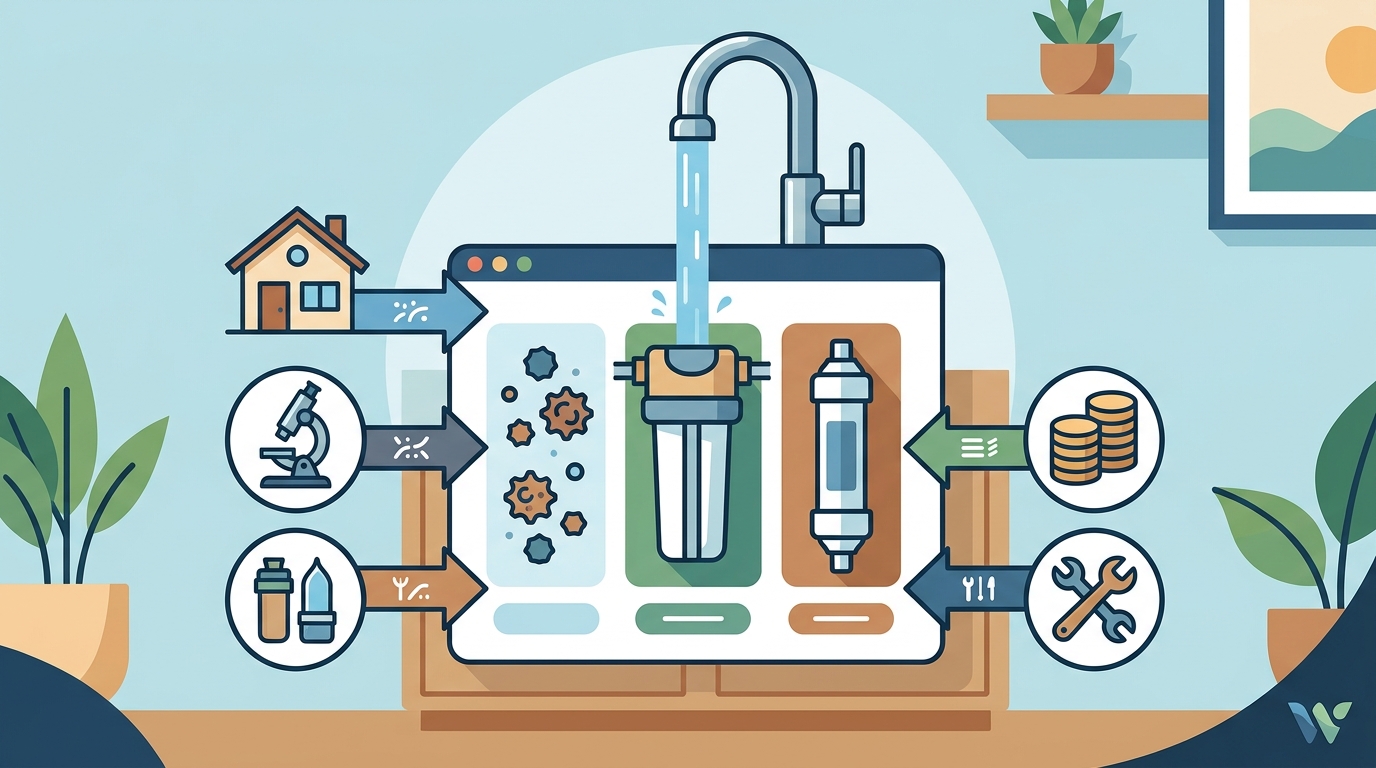
Get Your Water Tested
Woder offers lab water testing options ranging from an Essential City Water Test for basic concerns to a dedicated PFAS Water Test for forever-chemical screening. Knowing your specific contaminants lets you select a filter with precision rather than guesswork.
Types of Water Filters Explained
A water filter is a device that removes impurities from water using a physical barrier, chemical process, or biological mechanism. Filters vary widely in what they remove and how they are installed. Here are the main categories for home use.
Under-Sink Filters
Under-sink filters connect directly to your cold-water line beneath the kitchen sink. They provide filtered water on demand at full flow and stay hidden from view. Woder's WD-G4-DC under-sink system removes 99.9% of lead, heavy metals, chlorine, and PFAS while requiring no plumber for installation.
Inline Filters
An inline water filter is a compact unit that connects to 1/4-inch water supply lines feeding refrigerators, ice makers, or dedicated faucets. The Woder WD-G4-JG inline filter uses John Guest quick-connect fittings for tool-free setup and also targets PFAS removal.
Pitcher and Faucet-Mount Filters
Pitcher filters are the most affordable entry point but have limited capacity and slower flow rates. Faucet-mount filters attach to your tap and offer a step up in convenience. However, neither type matches the contaminant removal depth of an under-sink or inline system.
| Filter Type | Installation | Contaminant Removal | Filter Life | Best For |
|---|---|---|---|---|
| Under-Sink (e.g., Woder WD-G4-DC) | DIY, no plumber | Lead, PFAS, chlorine, VOCs, heavy metals | ~1 year | Primary drinking water |
| Inline (e.g., Woder WD-G4-JG) | Quick-connect | Lead, PFAS, chlorine, VOCs, heavy metals | ~1 year | Refrigerators, ice makers |
| Sediment Filter (e.g., Woder WD-20m) | DIY / inline | Dirt, sand, rust, sediment (20 micron) | Varies | Pre-filtration stage |
| Pitcher Filter | None | Chlorine taste, some lead | ~2 months | Budget, renters |
| Faucet-Mount | Screw-on | Chlorine, some lead | ~3 months | Apartment dwellers |
| Reverse Osmosis | Professional | Nearly all contaminants + minerals | 6-12 months | Extreme contamination |
Common Contaminants and Which Filters Remove Them
Not every filter addresses every contaminant. Matching your water quality report to a filter's certified removal capabilities is critical. Here are the most common concerns for US households.
Lead: Found in homes with pre-1986 plumbing. Activated carbon block and selective filtration systems handle lead effectively. Chlorine: Added during municipal treatment, chlorine causes taste and odor issues and can form disinfection byproducts. Most carbon-based filters reduce chlorine. PFAS: Requires specialized media. Look for filters explicitly tested for PFAS removal. Sediment: Visible particles like sand and rust require a dedicated sediment pre-filter, such as the Woder WD-20m sediment filter, especially in areas with older infrastructure or well water.
Selective Filtration vs. Reverse Osmosis
Selective Filtration is a technology that removes harmful contaminants while retaining beneficial minerals like calcium and magnesium. Woder's proprietary Selective Filtration technology removes 99.9% of contaminants but keeps the essential minerals your body needs.
Reverse osmosis (RO) also removes 99.9% of contaminants, but it strips out all minerals, leaving flat-tasting water. RO systems can also waste thousands of gallons of water annually during the flushing process. For most households on municipal water, selective filtration offers the best balance of safety, taste, and sustainability.
How to Choose the Right Filter for Your Home
Still unsure which filter is right for you? The Woder Wizard asks a few quick questions and recommends the best system for your specific needs. Here is a simple decision framework.
Step 1: Check your water quality report or order a lab test. Step 2: Identify your primary contaminant concerns (lead, PFAS, sediment, chlorine). Step 3: Decide on installation point. Under-sink for drinking water, inline for refrigerator or ice maker. Step 4: Consider whether you need a sediment pre-filter for high-particulate water. Step 5: Choose a filter with verified removal claims and a reasonable cartridge lifespan (one year is ideal for low maintenance).
All Woder filters are made in the USA and designed for DIY installation in under 10 minutes, putting you in control of your water quality without recurring service calls.
Key Takeaways
- Always test your water before choosing a filter so you target the right contaminants.
- Under-sink and inline filters offer the deepest contaminant removal for home use.
- PFAS, lead, and chlorine are the top three concerns for US households in 2026.
- Selective Filtration removes 99.9% of contaminants while preserving healthy minerals, unlike reverse osmosis.
- Sediment pre-filters extend the life of your primary filtration system in high-particulate water.
- Look for filters with at least a one-year cartridge lifespan to minimize maintenance.
- Woder's product Wizard helps match your water conditions to the ideal filter in minutes.
Frequently Asked Questions
What water filter removes PFAS?
Not all filters remove PFAS. You need a system specifically designed and tested for PFAS removal. Woder's Gen4 filters, such as the WD-G4-DC and WD-G4-JG, are engineered to remove PFAS along with lead, chlorine, and heavy metals.
Do I need a water filter if I have city water?
Yes. Municipal treatment addresses many contaminants, but chlorine, lead from aging pipes, and trace PFAS can still be present. A point-of-use filter adds a final layer of protection at your tap.
What is the difference between an under-sink filter and an inline filter?
An under-sink filter connects to your kitchen faucet's cold-water line and filters all water from that tap. An inline filter connects to 1/4-inch tubing that feeds a refrigerator, ice maker, or dedicated faucet.
How often do I need to replace my water filter cartridge?
It depends on the model and your water usage. Woder cartridges carry a one-year warranty and are designed for long-term use, reducing the hassle of frequent replacements.
Is reverse osmosis better than carbon filtration?
Reverse osmosis removes nearly everything, including beneficial minerals. Carbon-based selective filtration removes contaminants while keeping minerals intact. For most homes, selective filtration is more practical and wastes far less water.
Do Woder filters require a plumber to install?
No. Woder systems use direct-connect hoses that fit standard 3/8-inch water valves under US kitchen sinks. Most homeowners complete installation in under 10 minutes with no special tools.
How do I know which Woder filter is right for me?
Use the Woder Wizard tool. Answer a few questions about your water source and setup, and the Wizard recommends the best filter for your situation.
Find Your Perfect Water Filter Today
Clean, mineral-rich water should not be complicated. Try the Woder Wizard now to get a personalized filter recommendation in under two minutes, and start enjoying safer, better-tasting water from every tap in your home.