

Modern municipal water systems deliver millions of gallons daily, yet federal reports confirm that aging infrastructure introduces heavy metals and synthetic compounds into household taps. Selecting the correct filtration system requires matching your specific water chemistry to a proven purification method. Most homeowners overlook critical variables like flow rate, contaminant concentration, and maintenance cycles before purchasing hardware. This diagnostic guide breaks down the exact decision matrix you need to evaluate your home water quality. You will learn how to identify your primary contaminants, compare filtration architectures, and select a system that delivers consistent performance without wasting water or stripping essential minerals. (About Us Woder)
Step 1: Assess Your Primary Contaminants
Water quality varies drastically by geographic region and municipal treatment protocols. Global health data indicates that dissolved solids and particulate matter differ across every zip code. You must identify your specific threat profile before selecting hardware. Common household contaminants include chlorine byproducts, agricultural runoff, industrial discharge, and aging pipe corrosion. Testing your water through a certified laboratory provides the exact concentration metrics required for accurate filter sizing. Without precise data, you risk purchasing undersized cartridges that fail to capture target pollutants.
Common Household Pollutants
Chlorine remains the standard disinfectant for municipal supplies, yet it creates volatile organic compounds during distribution. Lead typically originates from pre-1986 plumbing fixtures and solder joints. PFAS compounds enter waterways through industrial manufacturing and firefighting foam runoff. Heavy metals like mercury and chromium six accumulate in sediment and migrate into groundwater supplies. Identifying these specific compounds dictates the necessary filtration media and cartridge density.
Step 2: Compare Filtration Architectures
Not all purification systems operate using identical mechanical principles. Reverse osmosis is a membrane-based purification process that forces water through a semi-permeable barrier, removing ninety-nine percent of dissolved solids alongside beneficial minerals. Activated carbon adsorption traps organic molecules within a porous matrix, improving taste and odor. Granular activated carbon combined with specialized ion exchange resins targets heavy metals without depleting calcium or magnesium. Certified testing standards verify which architecture matches your specific contaminant load. Matching the technology to the threat ensures maximum efficiency and longevity.
Membrane Versus Carbon Systems
Membrane systems require significant water pressure and generate substantial wastewater during operation. Carbon-based architectures operate passively using gravity and standard household pressure. Carbon systems preserve naturally occurring minerals that support cardiovascular and metabolic health. Selecting the correct architecture depends on your household water pressure, wastewater disposal preferences, and mineral retention goals.
Step 3: Evaluate Installation Requirements
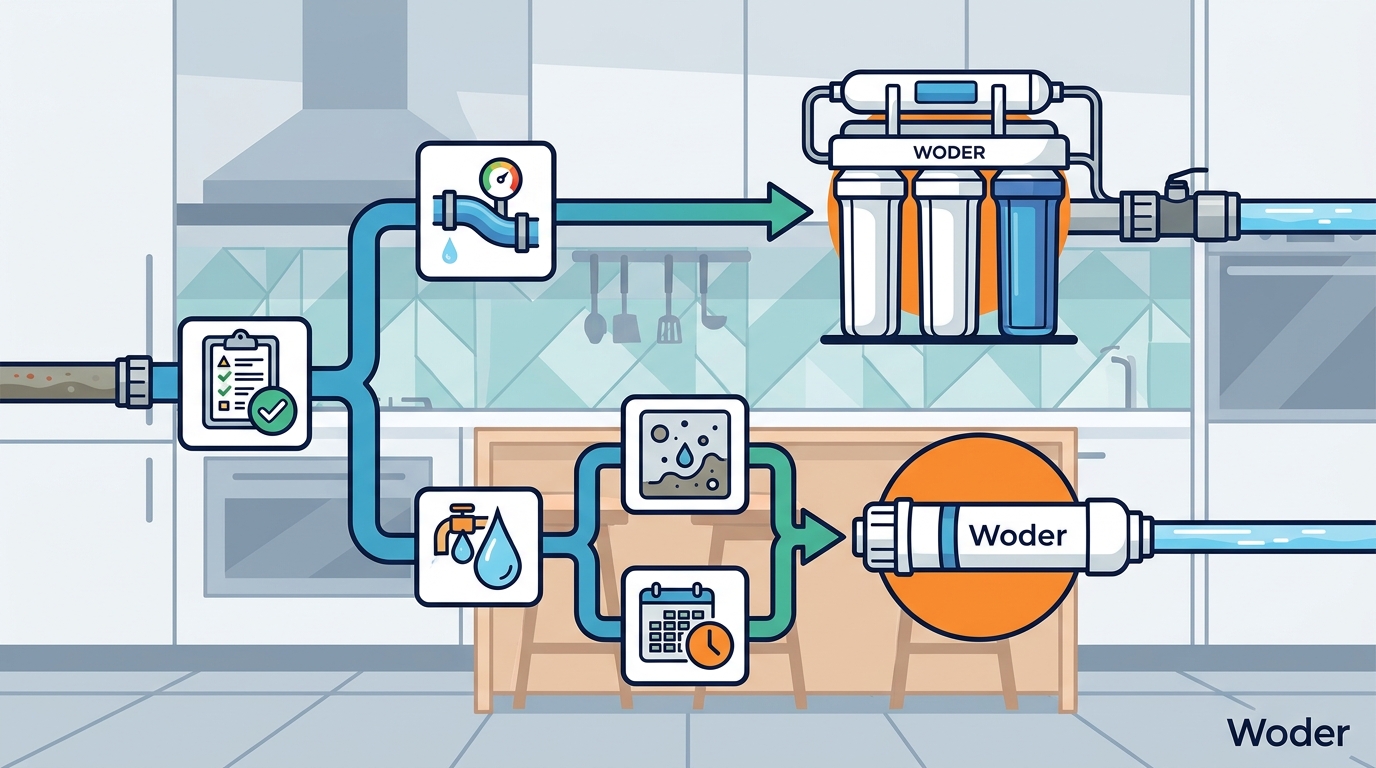
Physical space under your kitchen sink dictates the maximum dimensions of your filtration unit. Compact inline filters connect directly to existing supply lines without requiring cabinet modifications. Under sink systems utilize dedicated mounting brackets and require a separate faucet installation. Under sink water filters typically deliver higher flow rates and longer cartridge lifespans. Inline models prioritize space efficiency and quick swap capabilities for renters or mobile setups. Measuring your available cabinet volume prevents costly installation delays.
Faucet Mount Alternatives
Countertop pitcher filters offer immediate deployment without plumbing expertise. Faucet mount attachments screw directly onto existing aerators and divert water through a single-stage filter. These entry-level solutions handle basic sediment and chlorine reduction effectively. They lack the multi-stage capacity required for heavy metal or PFAS removal. Evaluate your daily water consumption and contaminant severity before committing to a countertop device.
Step 4: Calculate Maintenance Cycles
Filter longevity depends directly on your household water volume and initial contaminant concentration. Manufacturers rate cartridges based on gallons processed or months of continuous operation. Exceeding recommended replacement intervals allows breakthrough contaminants to bypass the filtration media. Public health guidelines emphasize strict adherence to manufacturer replacement schedules. Tracking your daily usage prevents system saturation and maintains optimal flow velocity. Many modern systems include digital flow meters or smart indicators to automate replacement alerts.
Disposal Protocols
Saturated filter cartridges contain concentrated pollutants that require responsible disposal methods. Standard landfills do not accept contaminated filtration media due to leaching risks. Specialized recycling programs extract usable carbon and plastic components from spent cartridges. Green disposal protocols ensure environmental compliance and reduce landfill waste. Always follow the manufacturer's packaging instructions when returning spent filters for processing.
Step 5: Understand Selective Filtration Technology
Advanced purification systems utilize proprietary nanoparticle matrices to target specific molecular structures. Selective filtration is a proprietary purification method that attracts harmful contaminants while preserving essential dissolved minerals. Traditional reverse osmosis systems strip calcium, magnesium, and potassium alongside lead and mercury. Selective filtration technology maintains the natural mineral balance that supports human hydration and metabolic function. This approach delivers spring-like water quality without compromising purification efficiency. Evaluating your mineral retention priorities ensures long-term health benefits from your daily drinking water.
Mineral Retention Benefits
Essential minerals contribute to bone density, electrolyte balance, and enzymatic reactions. Depleted water lacks these critical compounds, potentially requiring dietary supplementation. Selective filtration preserves naturally occurring minerals while capturing ninety-nine percent of targeted pollutants. This balance reduces the need for expensive mineral re-addition cartridges. Homeowners prioritizing long-term health metrics consistently prefer selective filtration architectures over complete demineralization systems.
Filtration System Comparison
| System Type | Contaminant Removal | Mineral Retention | Installation Complexity | Recommended Use Case |
|---|---|---|---|---|
| Under Sink Selective | Heavy metals, PFAS, chlorine | High | Moderate | Wizard filtration system |
| Inline Bypass | Sediment, basic chemicals | High | Low | Inline water filters |
| Reverse Osmosis | Dissolved solids, viruses | None | High | Industrial or high-mineral water |
| Countertop Pitcher | Chlorine, basic particulates | Moderate | None | Renters or temporary setups |
Key Takeaways
- Modern municipal water systems deliver millions of gallons daily, yet aging infrastructure introduces heavy metals and synthetic compounds into household taps.
- Selective filtration technology captures ninety-nine percent of targeted pollutants while preserving essential dissolved minerals.
- Under sink systems typically deliver higher flow rates and longer cartridge lifespans compared to countertop alternatives.
- Woder manufactures all filtration units in the United States, ensuring compliance with federal building codes and safety standards.
- Laboratory water testing is a certified analytical procedure that measures exact concentration metrics for lead, PFAS, chlorine, and dissolved solids.
- Green disposal protocols extract usable carbon and plastic components from spent cartridges to prevent environmental leaching.
- Smart flow meters and digital indicators automate replacement alerts, preventing system saturation and breakthrough contamination.
Frequently Asked Questions
How do I know which filter removes lead effectively?
Look for systems certified under NSF/ANSI Standard 53 for lead reduction. Verify that the cartridge contains specialized ion exchange resins or activated carbon blocks rated for heavy metal capture. Request third-party laboratory test reports from the manufacturer before purchasing.
Can a water filter remove PFAS compounds?
Yes, advanced granular activated carbon and specialized resin blends effectively capture PFAS molecules. Selective filtration architectures specifically target these synthetic compounds while preserving beneficial minerals. Always verify the manufacturer's published removal percentages for PFAS before installation.
What is the average lifespan of an under sink water filter?
Most residential under sink cartridges process between two thousand to four thousand gallons before requiring replacement. Actual lifespan depends on your daily water consumption and initial contaminant concentration. Digital flow meters track usage accurately to prevent breakthrough contamination.
Do I need professional installation for an under sink system?
Most modern under sink systems include comprehensive installation guides and standard connection fittings. DIY installation typically requires basic plumbing tools and approximately thirty minutes of setup time. Professional installation remains optional but recommended for complex plumbing configurations.
How does selective filtration differ from reverse osmosis?
Reverse osmosis forces water through a semi-permeable membrane, removing ninety-nine percent of dissolved solids alongside beneficial minerals. Selective filtration utilizes proprietary nanoparticle matrices to attract harmful contaminants while preserving essential dissolved minerals. This distinction impacts long-term hydration and mineral intake from daily drinking water.
Where can I schedule a professional water quality test?
Many filtration manufacturers offer laboratory water testing programs to analyze your specific tap water chemistry. Certified testing provides exact concentration metrics for lead, PFAS, chlorine, and dissolved solids. Accurate testing data ensures you select the correct cartridge density and filtration architecture.
Next Steps
Matching your household water chemistry to the correct filtration architecture prevents costly mistakes and ensures consistent purification performance. Start by scheduling a professional laboratory water test to identify your specific contaminant profile. Compare the available under sink water filters against your daily consumption metrics and cabinet space constraints. Contact our support team to review your test results and receive a customized system recommendation. Visit our contact page to schedule a consultation or request detailed product specifications. Secure your water quality today with a system engineered for long-term reliability and mineral preservation.