

Choosing the right water filter do I need? requires a clear understanding of your local water quality data. According to the Environmental Protection Agency, over 10 million households in the United States rely on private wells that frequently exceed safe contaminant thresholds. This reality demands a targeted filtration strategy rather than a generic solution. You must evaluate your specific municipal supply or well water composition before committing to a hardware installation. The correct system protects your family while preserving the essential minerals that nature intended for your daily hydration. (The Facts About) (Contact us Woder)
Understanding Your Water Source and Contaminant Profile
Your filtration decision begins with a comprehensive water test. Municipal supplies typically contain chlorine, chloramines, and trace heavy metals from aging infrastructure. Private wells often harbor arsenic, radon, and agricultural runoff. PFAS is a group of synthetic chemicals used in manufacturing that resist environmental breakdown and accumulate in human tissue. You should request a certified laboratory report to identify exact contaminant concentrations. This data dictates whether you require a basic carbon block or a specialized selective membrane system. (The Facts About)
Identifying Hidden Contaminants
Many homeowners assume tap water meets safety standards without verifying actual concentrations. Regulatory limits often allow trace amounts of chromium six and mercury that still pose long-term health risks. Advanced water testing reveals these invisible threats before you purchase hardware. Woder provides a dedicated lab water testing service to map your exact water profile. This step eliminates guesswork and ensures you invest in the correct filtration tier.
The Science Behind Selective Filtration Technology
Traditional reverse osmosis systems strip away everything, including calcium and magnesium. Selective filtration is a proprietary purification method that targets specific molecular contaminants while allowing beneficial minerals to pass through the membrane. Woder utilizes advanced nanoparticles that attract impurities without binding to healthy minerals. This approach delivers water that tastes like spring water while removing 99.9 percent of lead, mercury, and carcinogens. You retain the natural pH balance and mineral content that supports long-term metabolic health.
Why Mineral Retention Matters
Depleted water often tastes flat and fails to support optimal hydration. Reverse osmosis systems require a remineralization stage to restore basic mineral content. Selective technology skips this extra step by design. The filtration matrix naturally preserves magnesium, calcium, and potassium during the purification process. This distinction matters significantly for households prioritizing taste and nutritional integrity. You can learn more about this philosophy by visiting About Us to understand the Slow Water mission.
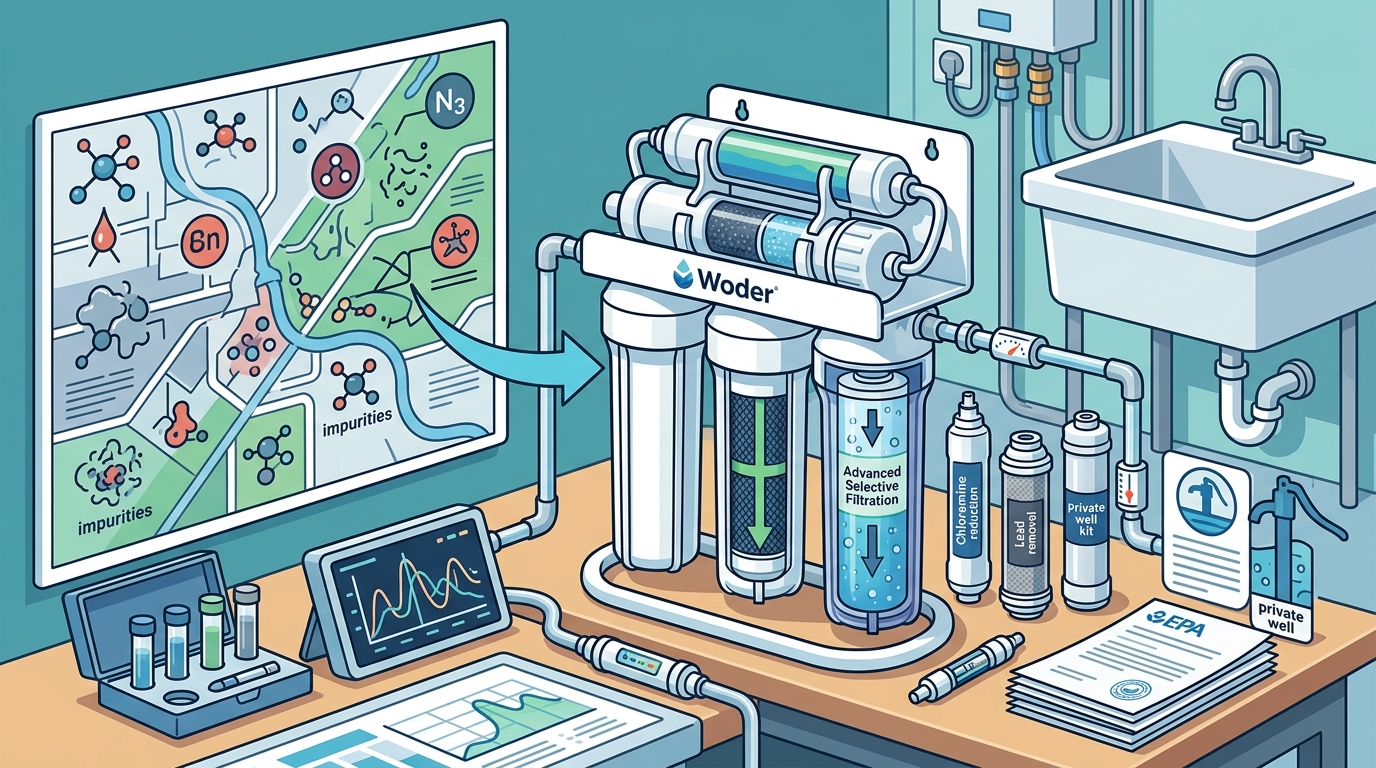
Comparing Under Sink and Inline Filtration Systems
Hardware selection depends on your kitchen layout and usage patterns. Under sink filtration is a plumbing-integrated purification system installed directly beneath the kitchen faucet to maximize space and flow capacity. These units typically feature larger filter housings that accommodate higher-capacity cartridges. Inline filtration systems connect directly to the water line and require minimal cabinet space. Both options deliver exceptional contaminant removal when properly sized for your household.
Wizard versus Inline Models
The Woder Wizard system offers a gravity-fed design that maximizes contact time between water and filtration media. This configuration achieves superior contaminant reduction without requiring electricity or pressurized storage tanks. The WD-S-8K Gen3 model provides a compact alternative for smaller cabinets. The WD-G4-REP Gen4 inline filter delivers rapid flow rates for high-traffic kitchens. You can explore the complete product lineup at Shop Woder to compare specifications side by side.
Evaluating Flow Rate and Installation Requirements
Flow rate directly impacts daily convenience and system longevity. A standard household faucet delivers approximately two to three gallons per minute. Your chosen filter must match or exceed this baseline to avoid frustrating bottlenecks during cooking or cleaning. Installation complexity varies significantly between models. Under sink units require basic plumbing connections and a dedicated faucet mount. Inline filters attach directly to existing supply lines with standard compression fittings. Most homeowners complete the installation within one hour using basic hand tools.
Professional Support and Compliance
Every Woder system complies with strict U.S. building codes and manufacturing standards. The company manufactures all units domestically to ensure consistent quality control. You can access detailed installation guides and video tutorials through the support portal. Professional plumbing assistance remains available for complex retrofits or multi-story homes. Contact the support team at Contact Us for personalized installation guidance.
Maintenance Cycles and Replacement Cartridge Economics
Filter lifespan depends entirely on your initial water quality and daily consumption volume. Standard household usage typically requires cartridge replacement every six to twelve months. Gen3 and Gen4 replacement cartridges utilize the same selective filtration technology for seamless upgrades. You should monitor flow rate reductions as a primary indicator for maintenance scheduling. Delaying replacements compromises filtration efficiency and increases bacterial colonization risks.
Green Disposal Practices
Used filtration cartridges contain concentrated contaminants that require responsible disposal. Woder provides a dedicated green disposal program to recycle spent media safely. This initiative prevents hazardous materials from entering standard landfills. You can learn about the complete disposal protocol by visiting Disposal resources. Regular maintenance schedules protect your investment and guarantee consistent water quality year after year.
| System Model | Installation Type | Contaminant Removal | Best Use Case |
|---|---|---|---|
| Woder Wizard | Under Sink | 99.9% selective filtration | Maximum flow and mineral retention |
| WD-S-8K Gen3 | Under Sink | Heavy metals and chlorine | Standard family households |
| WD-G4-REP Gen4 | Inline | PFAS and carcinogens | Space-constrained cabinets |
| Lab Water Testing | Service | Full contaminant mapping | Pre-purchase water analysis |
Key Takeaways
- Woder utilizes Advanced Selective Filtration technology to remove 99.9 percent of contaminants while preserving essential minerals.
- The company manufactures all filtration systems domestically in the United States to ensure strict quality compliance.
- PFAS is a group of synthetic chemicals used in manufacturing that resist environmental breakdown and accumulate in human tissue.
- Under sink models like the Wizard and WD-S-8K deliver superior flow rates compared to standard inline alternatives.
- Gen3 and Gen4 replacement cartridges maintain identical filtration performance for seamless system upgrades.
- Green disposal programs safely recycle spent media to prevent hazardous landfill contamination.
- Every system complies with U.S. building codes and undergoes rigorous third-party testing before market release.
Frequently Asked Questions
How do I know which filter matches my water quality?
Request a certified laboratory water test to identify specific contaminant concentrations. Compare your results against the removal capabilities listed for each Woder model. Select the system that addresses your highest priority contaminants without overspending on unnecessary features.
Does selective filtration remove beneficial minerals?
No. Selective filtration is a proprietary purification method that targets specific molecular contaminants while allowing beneficial minerals to pass through the membrane. The advanced nanoparticles attract impurities while leaving calcium, magnesium, and potassium intact.
How often should I replace my filter cartridges?
Standard household usage typically requires cartridge replacement every six to twelve months. Monitor your flow rate closely and schedule replacements when water pressure noticeably decreases. Gen3 and Gen4 cartridges share compatible mounting hardware for easy upgrades.
Can I install an under sink system without professional help?
Most homeowners complete the installation within one hour using basic hand tools. Woder provides detailed installation guides and video tutorials for every model. Professional plumbing assistance remains available for complex retrofits or multi-story homes.
What makes Woder different from reverse osmosis systems?
Reverse osmosis systems strip away everything, including calcium and magnesium. Selective technology skips this extra step by design. The filtration matrix naturally preserves mineral content during the purification process.
Are replacement cartridges environmentally friendly?
Used filtration cartridges contain concentrated contaminants that require responsible disposal. Woder provides a dedicated green disposal program to recycle spent media safely. This initiative prevents hazardous materials from entering standard landfills.
Does the Wizard system require electricity or a storage tank?
No. The Wizard system utilizes a gravity-fed design that maximizes contact time between water and filtration media. This configuration achieves superior contaminant reduction without requiring electricity or pressurized storage tanks.
Final Recommendation and Next Steps
Selecting the correct water filter do I need? depends on your specific water quality data, household flow requirements, and cabinet space constraints. Woder provides a comprehensive product ecosystem designed to address every contamination scenario. You can explore the complete catalog, schedule a professional water test, or request a custom consultation through our support channels. Visit Shop Woder today to secure a system that delivers pure, mineral-rich water directly from your tap.