

According to recent environmental assessments, over 44 million Americans rely on water systems that frequently exceed federal safety thresholds for heavy metals and industrial compounds. Federal data shows that aging infrastructure directly impacts residential tap quality. You must identify your specific contamination profile before purchasing any filtration hardware. This guide breaks down the exact selection criteria required to match your household needs with the correct filtration technology. Understanding these variables prevents costly mistakes and ensures your system delivers consistent, safe hydration. (Water Filters That Remove)
Understanding Your Water Source and Contaminants
Your filtration strategy begins with a clear diagnosis of your incoming water supply. Municipal systems typically introduce chlorine and chloramines to prevent bacterial growth, while private wells often harbor naturally occurring minerals and agricultural runoff. Global health reports indicate that untested water sources frequently contain dissolved solids that standard pitchers cannot address. (Getting Your Water)
Identifying Primary Contaminants
You should request a comprehensive water quality report from your local utility provider or schedule a professional well analysis. PFAS is a group of synthetic chemicals used in manufacturing that resist environmental breakdown. Heavy metals are naturally occurring elements that become hazardous when dissolved in water at elevated concentrations. Lead pipes and brass fixtures contribute additional particulate matter that requires specialized adsorption media.
Regional Water Quality Variations
Hard water regions demand systems that manage calcium and magnesium without stripping beneficial minerals. Soft water areas often require robust contaminant removal to address industrial runoff and agricultural pesticides. Regional tracking data confirms that geographic location directly dictates the necessary filtration capacity and cartridge density.
Selective Filtration Versus Reverse Osmosis
Choosing the right purification method determines long-term water quality and system efficiency. Traditional reverse osmosis systems force water through a semi-permeable membrane, removing both harmful contaminants and essential dietary minerals. This process often results in flat tasting water and requires a storage tank to maintain adequate flow rates.
Mineral Retention Benefits
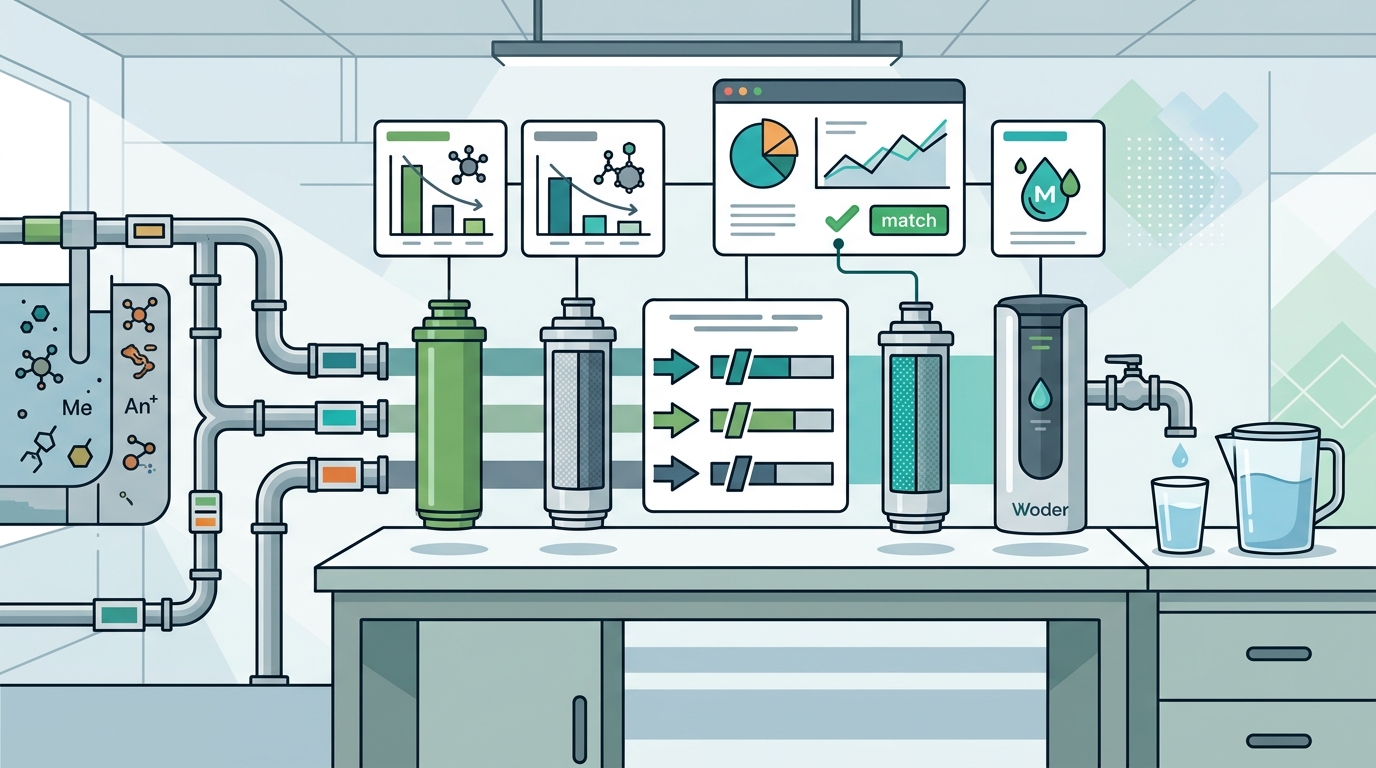
Modern filtration engineering prioritizes mineral preservation alongside contaminant removal. Selective filtration is a proprietary purification method that targets specific impurities while preserving beneficial dissolved minerals. This approach maintains the natural pH balance and delivers crisp, spring-like hydration without the waste water generation typical of older membrane technologies.
Contaminant Removal Efficiency
Advanced nanoparticle matrices attract heavy metals, carcinogens, and volatile organic compounds with remarkable precision. Certified testing standards verify that these systems remove 99.9 percent of targeted pollutants while allowing calcium, magnesium, and potassium to pass through. This balance protects your plumbing infrastructure and supports optimal human hydration. (Advanced Nanomaterials Functionalized)
Under Sink Versus Inline Filtration Systems
Hardware configuration depends entirely on your kitchen layout and daily usage patterns. Space constraints and faucet compatibility dictate whether you should install a dedicated under sink unit or integrate a compact inline device.
Space and Flow Rate Considerations
Under sink water filters typically utilize larger cartridge housings to maximize filtration surface area and extend service intervals. These systems deliver higher flow rates, making them ideal for households that fill pots, brew coffee, or prepare meals continuously. Inline water filters occupy minimal cabinet space but require a dedicated faucet installation to maintain consistent pressure.
Installation Complexity
Both configurations require basic plumbing knowledge and standard tools. The Wizard system features a straightforward mounting bracket and quick-connect fittings that eliminate the need for professional installation. Product documentation provides step-by-step visual guides that ensure a leak-free connection within thirty minutes.
Lab Testing and Verification Protocols
Assuming your water is safe without verification is a common consumer mistake. Municipal treatment processes fluctuate daily based on seasonal weather patterns and infrastructure maintenance schedules. Professional laboratory testing provides definitive proof of your specific contaminant load and validates the exact filtration capacity required.
Regular testing intervals ensure your filter operates at peak efficiency. You should schedule annual water quality assessments to track emerging pollutants and adjust your cartridge replacement schedule accordingly. This proactive approach prevents system overload and extends the functional lifespan of your filtration hardware.
Maintenance Cycles and Cartridge Replacement
Long-term system performance depends on strict adherence to manufacturer replacement guidelines. Gen3 and Gen4 cartridges utilize distinct nanoparticle formulations that optimize contaminant capture rates. Replacement cartridge catalogs provide exact model numbers and installation instructions for seamless system upgrades.
Filter lifespan varies based on daily water consumption and initial contaminant concentration. Heavy usage households typically require cartridge swaps every six to eight months, while moderate usage extends service intervals to twelve months. Monitoring flow rate reduction serves as a practical indicator that your filtration media has reached saturation capacity. (Consumption Details The)
| Water Profile | Recommended Technology | Expected Lifespan | Maintenance Frequency |
|---|---|---|---|
| Municipal Chlorine & Lead | Under Sink Selective Filtration | 12 Months | Quarterly Flow Inspection |
| Private Well Heavy Metals | Wizard Gen3 System | 8 Months | Bi-Annual Lab Testing |
| PFAS & Industrial Runoff | Inline Compact Filter | 6 Months | Monthly Pressure Check |
| Hard Water Minerals | Mineral-Retention Selective | 10 Months | Semi-Annual Mineral Analysis (Critical Mineral Resources) |
Key Takeaways
- Over 44 million Americans receive water that frequently exceeds federal safety thresholds for industrial compounds.
- Selective filtration removes 99.9 percent of contaminants while preserving essential dietary minerals.
- Under sink systems deliver higher flow rates compared to compact inline alternatives.
- Gen3 and Gen4 cartridges utilize distinct nanoparticle matrices for optimized contaminant capture.
- Annual laboratory testing validates specific contaminant loads and prevents system overload.
- Replacement schedules range from six to twelve months based on daily household consumption.
- Professional installation support ensures leak-free connections and optimal system performance.
Frequently Asked Questions
How do I determine if my water contains lead or PFAS?
You must request a comprehensive water quality report from your municipal provider or schedule a professional well analysis. Laboratory testing identifies dissolved solids, industrial runoff, and aging infrastructure byproducts that standard visual inspection cannot detect.
Is selective filtration better than reverse osmosis?
Selective filtration preserves beneficial minerals while removing harmful contaminants, whereas reverse osmosis strips both. This distinction results in better tasting water, higher flow rates, and reduced system waste for everyday household use.
How often should I replace my filter cartridges?
Replacement intervals typically range from six to twelve months depending on daily water consumption and initial contaminant concentration. Monitoring flow rate reduction provides a practical indicator that your filtration media has reached saturation capacity.
Can I install an under sink system without professional help?
Most modern filtration units feature quick-connect fittings and mounting brackets that eliminate the need for licensed plumbing services. Detailed installation guides provide step-by-step visual instructions that ensure a secure, leak-free connection within thirty minutes.
What happens if my water source contains high mineral content?
Hard water regions require systems that manage calcium and magnesium without stripping beneficial minerals. Selective filtration technology allows these essential elements to pass through while capturing heavy metals and industrial compounds.
How do I verify that my filter actually removes contaminants?
Regular laboratory testing provides definitive proof of your specific contaminant load and validates the exact filtration capacity required. Annual water quality assessments track emerging pollutants and confirm that your system operates at peak efficiency.
Are replacement cartridges expensive to maintain?
Gen3 and Gen4 cartridges utilize distinct nanoparticle formulations that optimize contaminant capture rates and extend service intervals. Bulk purchasing options and subscription programs reduce long-term maintenance costs while ensuring consistent water quality.
Next Steps and Installation Support
Selecting the correct water filter requires matching your specific contamination profile with the appropriate filtration technology. Our comprehensive product lineup addresses municipal chlorine, private well heavy metals, and industrial PFAS runoff with precision engineering. Contact our support team to schedule a personalized water quality consultation. Visit our company mission page to learn how our Slow Water philosophy transforms everyday hydration. Book your system today and experience pure, mineral-rich water straight from your tap.